

- Best Oversized Sofas That Won’t Make Your Room Feel Smaller - November 11, 2026
- My PUR Filter Review After 6 Months - November 10, 2026
- The Best Deep Sofas by Use Case - October 5, 2026
When online shopping for my new sofa, I found the perfect one. It looked big and comfy, and it had enough seats for the whole family plus the friends who always seem to end up at our house. I loved how it looked on the website, so I eyeballed the size of my room against the dimensions online and placed the order.
Then it arrived. The delivery crew squeezed it through the front door and moved it into my living room, and when I stood back, I realized it was way too big for the space. So there I was, reconfiguring the entire space to work around my giant sofa.
This might sound familiar, or maybe it’s even happened to you. The good news is it’s easy to avoid. Let’s break down which sofa types work for different room sizes, with pros and cons for each. That way, before you fall in love with your next sofa, you’ll know what will actually work for your space.
How Big Is Your Space?
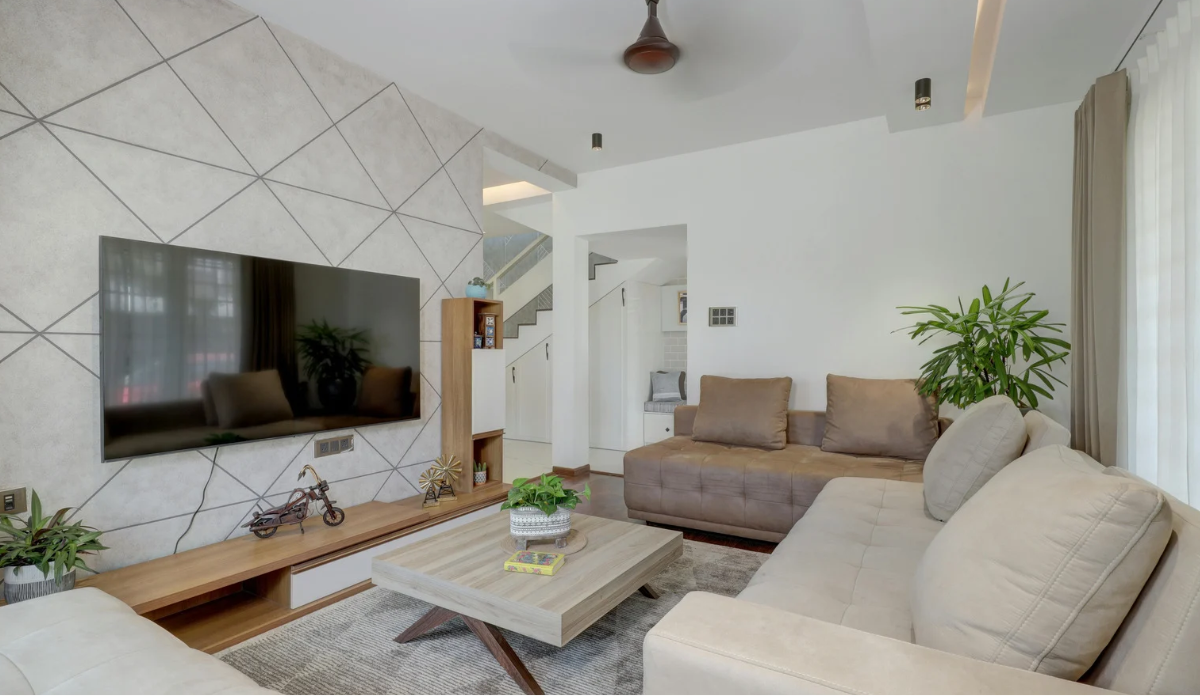
Before you start shopping, grab a tape measure and figure out how big your space is and where you want your sofa to go. Measure the full room, the wall or corner where the sofa will sit, and every doorway, hallway, and stairwell it has to pass through on delivery day.
Then leave yourself some buffer space. A good rule of thumb is about 12 to 18 inches on the sides of the sofa and between the sofa and your coffee or side tables, with main walkways closer to 30 inches.
Use painter’s tape to outline the sofa’s full footprint on the floor, including depth. Try living with it for a week or so to get a feel for the space and see if it feels too big or cramped.
Small Living Rooms (Roughly 10×12 to 12×14 Feet)
In a smaller space, you have a few options. One limits your seating, and the other two give you more seats but need more space.
Option 1: A Three-Cushion Sofa
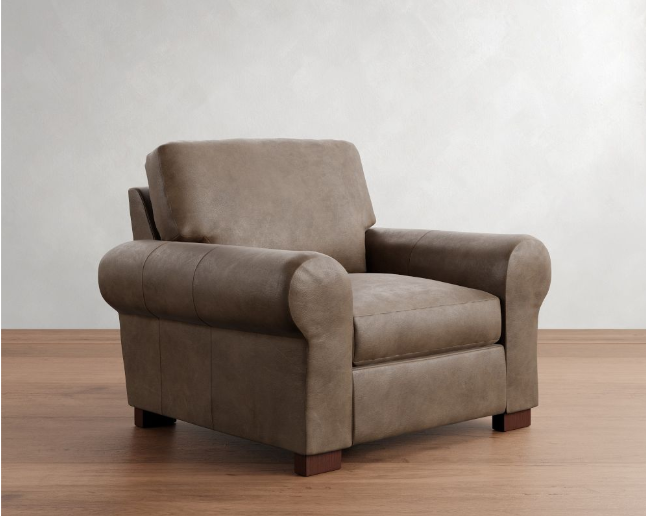
Average price: $1,200 – $2,000
Typical footprint: about 84 inches wide by 35 to 37 inches deep
Example: Pottery Barn, Pacifica Wide Arm Sofa, $899 – $1,999
A three-cushion sofa fits along one long wall and still leaves room for a chair or side table. If your wall allows it, look for one closer to 90 inches so three people can sit without squeezing in. Adding an accent chair or two gives you extra seats without the bulk of a sectional.
Pros: It’s the simplest setup and leaves the most open floor space. It’s easy to place, easy to move, and usually the most budget-friendly of the three options.
Cons: It realistically seats three, so you’ll need extra chairs or floor cushions when you have company. If you have a big family or entertain a lot, you’ll probably outgrow it fast.
Option 2: An L-Shaped Corner Sectional
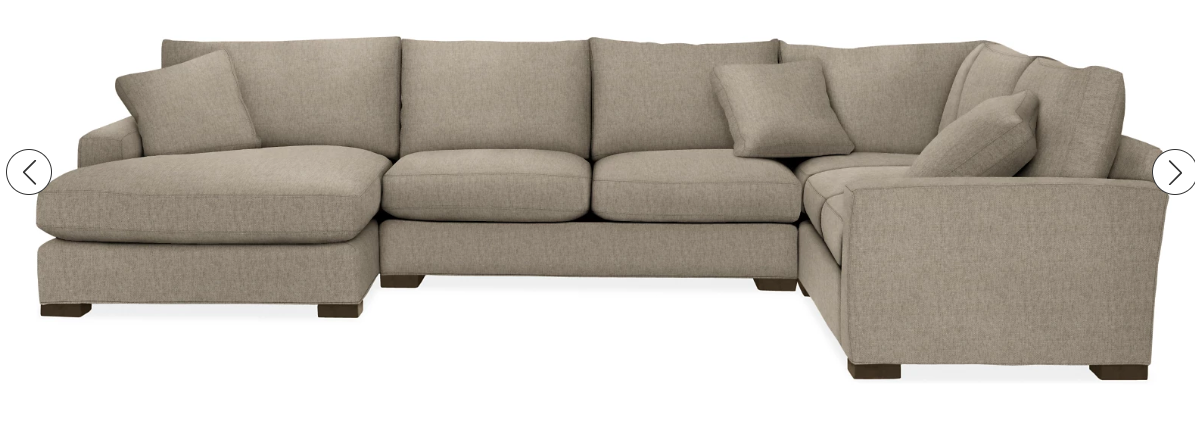
Average price: $3,500 – $7,000
Typical footprint: about 90 to 120 inches on each side, 36 to 40 inches deep
Example: Room & Board, Metro Sectional, 18 size options, $2,699 – $11,600
An L-shaped sectional tucked into a corner is one of the best ways to get a lot of seating without closing off the room. Because it hugs two walls, the middle of the room stays open for a coffee table, a rug, and walking space.
In a small room, look for one with a low back, slimmer arms, and a shallower seat. The less deep it is, the more walking room you’ll have. It’ll work even better if you can find one that’s specifically sized to your corner.
Pros: It’s about as easy as it gets for placement. Push it into the corner, and you’re done. You also get the most seats per square foot, since the corner itself becomes a seat.
Cons: You’re limited in configurations. An L-shape usually only works one way in a given room, so if you like to rearrange furniture, this one’s harder to work with. And if the corner you need has a window, vent, or doorway in the way, you might not have many options.
Option 3: A Sofa and Loveseat Combo
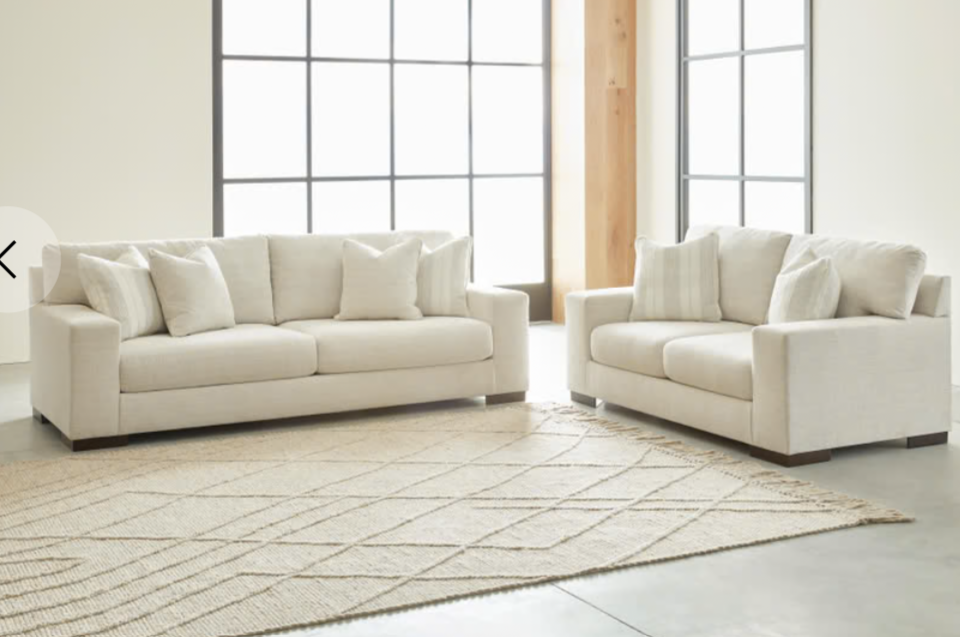
Average price: $2,000 – $7,000
Typical footprint: a standard sofa runs about 82 to 86 inches wide, a loveseat about 52 to 72 inches, each roughly 35 to 39 inches deep
Example: Ashley, Maggie Sofa and Loveseat, $1,349.98
If you want flexibility, a sofa and loveseat set at a right angle can still leave the space open. Put a small side table in the corner where the two pieces meet, and you’ve got a spot for drinks, books, remotes, and everything else that usually ends up on the floor. To keep it from looking busy, choose a matching set or two pieces in the same fabric. It’ll look like one seating area instead of two random pieces.
Pros: You can move things around. Swap sides, float one piece, or split them up if you move. Two smaller pieces are also easier to get through tight doorways and up stairs.
Cons: You lose some seating compared to an L-shaped sectional. That corner side table takes the spot where a corner seat would be. If your kids bring the whole crew over, you may need a couple of floor cushions or an ottoman to make up the difference.
Medium Living Rooms (Roughly 12×16 to 14×18 Feet)
If you have a little more room to work with, you can go bigger without the sofa taking over. The goal is to find a sectional that gives you space to stretch out but still looks light.
Chaise or Bumper Sectionals
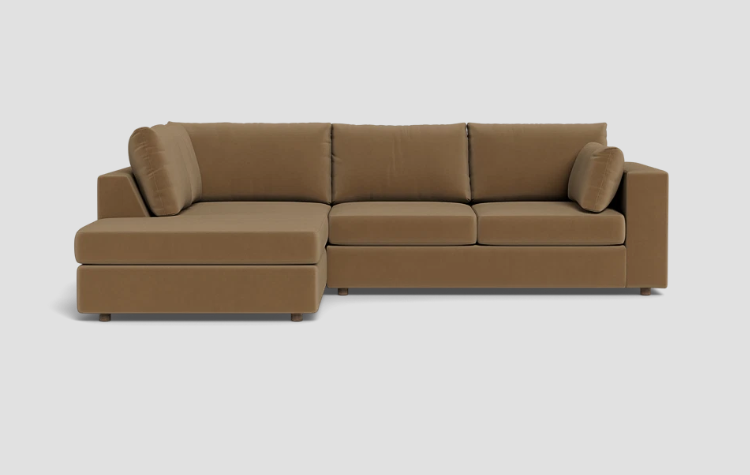
Average price: $4,000 – $6,000
Typical footprint: about 90 to 120 inches wide, with a chaise or bumper end extending 60 to 96 inches
Example: What A Room, Daphne Bumper Sectional, from $4,005
A chaise sectional is basically a sofa with one extended seat for lounging. A bumper sectional swaps the chaise for a rounded, armless end that feels a little softer and more open. Both give you the lounging space of a big sectional with a smaller footprint than a full L-shape.
In a medium room, look for raised legs and slim arms. Seeing the floor under the sofa makes it feel lighter, and thinner arms put more of the width into actual seating.
Pros: You get a spot to put your feet up without a heavy, boxy ottoman look. They also work well floating in a room, which helps define the living area in a space that opens to a kitchen or dining room.
Cons: The chaise usually seats one person, not two, so you get less seating than the footprint suggests. And the open end still needs a clear walkway around it, so measure that side carefully.
Large Rooms and Open Floor Plans (Roughly 16×16 Feet and Up)
U-Shaped Sectionals
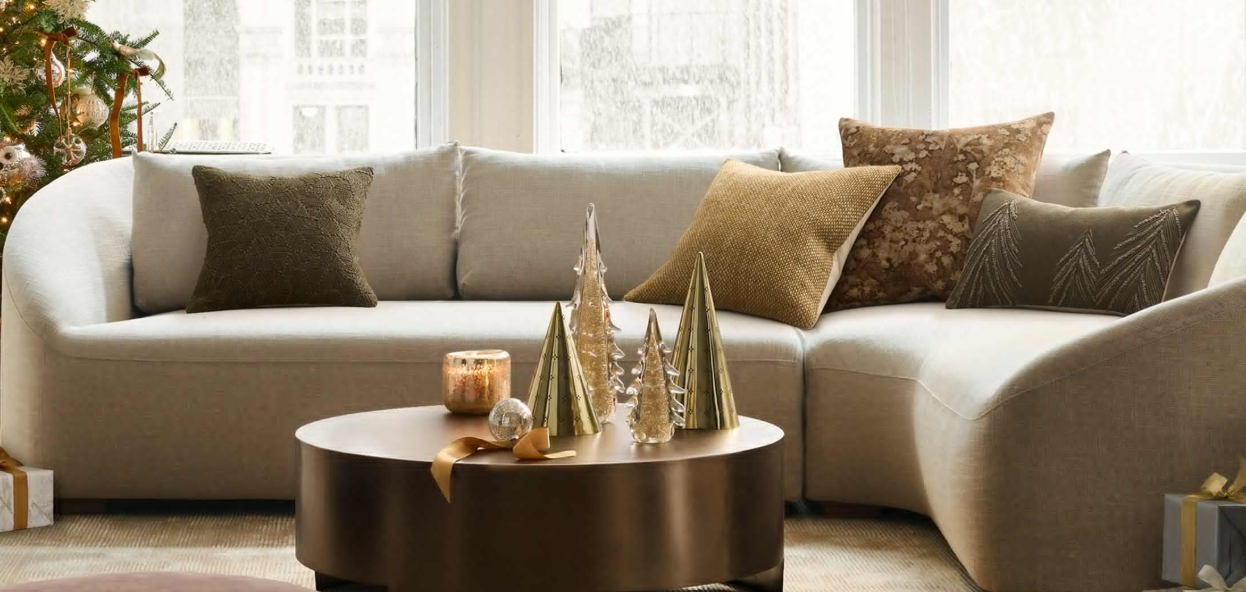
Average price: $4,000 – $9,000
Typical footprint: often 130 to 160 inches or more across, with returns of 80 inches or more on each side
Example: West Elm, Dalton 3-Piece U-Shaped Bumper Chaise Sectional, $4,697 – $5,897
A U-shaped sectional wraps seating around three sides and gives everyone a place to sit and talk. It’s great for movie nights, game days, and big family gatherings where everyone wants to be in the same room. If a full U feels like too much, a double chaise sectional is a good middle ground. You get two lounge spots on either end without fully closing the U.
Pros: Maximum seating, and everyone faces each other. In a big room, a U-shape helps the living area feel like its own space.
Cons: It needs real floor space around it, and it can block traffic flow if the room has several entry points. It’s also typically the most expensive option, and the hardest to rearrange or take with you to a new home.
Two Sofas Facing Each Other
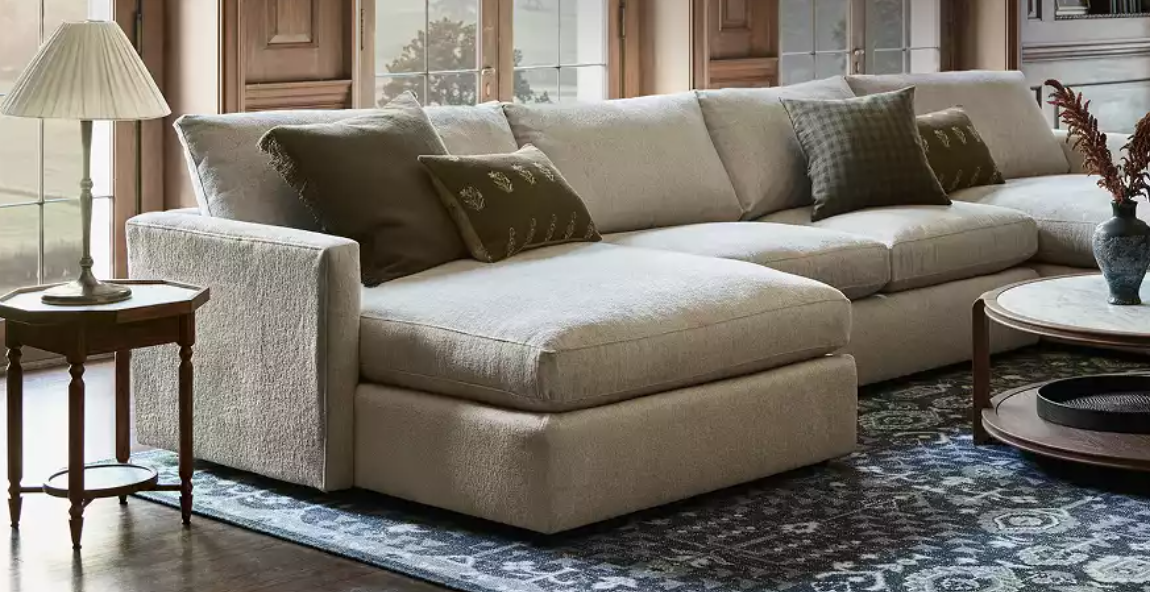
Average price: $3,000 – $6,000
Typical footprint: two full-size sofas, about 84 to 96 inches wide each, with 4 to 6 feet between them for a coffee table.
Example: Crate & Barrel, Lounge Collection, multiple sofa sizes, from $1,799
Two matching sofas facing each other across a coffee table is a classic setup for a big room. It works really well in front of a fireplace or in an open floor plan where you want the living area to feel separate from the kitchen.
Pros: It’s easy to talk face to face, and you can still move the pieces around later. Two sofas are also easier to get through the door than one giant sectional.
Cons: It’s not the best setup for watching TV, since one sofa ends up with the TV off to the side. You’ll also need a clear walkway around both ends.
Modular Sectionals
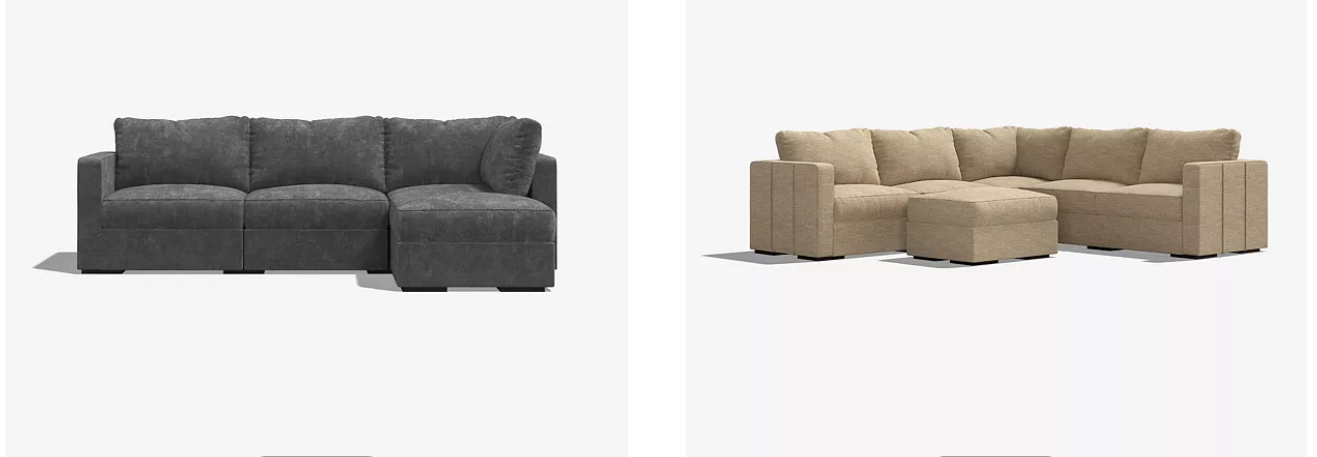
Average price: $5,000 – $7,000
Typical footprint: it depends on how many pieces you get, but each section is usually about 30 to 40 inches wide.
Example: LoveSac, Sactionals, multiple style options, from $1,900
A modular sectional comes in separate pieces you can arrange however you want. Set it up as a big L for movie night, pull a piece off as an extra chair when friends come over, or turn it into a U for the holidays.
Pros: It’s the most flexible option. It can change with your room and come with you if you move to a smaller or bigger space.
Cons: The pieces can shift or separate over time, and some people find modular seats less comfy than a traditional sectional. The extra pieces can also add up in price.
How Much Seating Do You Need?
This might be the question that makes the decision for you. Before you pick a shape, count how many people regularly sit in the room at the same time, not just on holidays.
Plan on about 24 to 30 inches of seat width per person. That means a 90-inch sofa realistically seats three, while a good-sized L-shaped sectional with a usable corner can seat five or six.
If it’s usually just your family plus a couple of friends, a sofa and loveseat combo gives you plenty of room. If you’re the house where all the kids end up, an L-shaped sectional is probably worth giving up some flexibility. And if you’re hosting big groups in a big room, that’s when a U-shape makes sense.
How to Make a Big Sofa Feel Smaller
A few tricks can help a big sofa look smaller.
Choose a shallower depth. Deep seats are great for lounging, but the extra depth takes away from your walkway. In smaller rooms, 36 to 40 inches overall is usually plenty.
Keep the back and arms low. A lower sofa won’t block your view across the room.
Look for raised legs. Seeing the floor under the sofa makes the room feel larger.
Pick a fabric close to your wall color. It’ll blend in, while a bold contrasting color stands out and makes the sofa look bigger.
Try a bench cushion. One long seat cushion gives a cleaner, less busy look than three separate ones.
Where to Find a Sofa That Fits Your Space
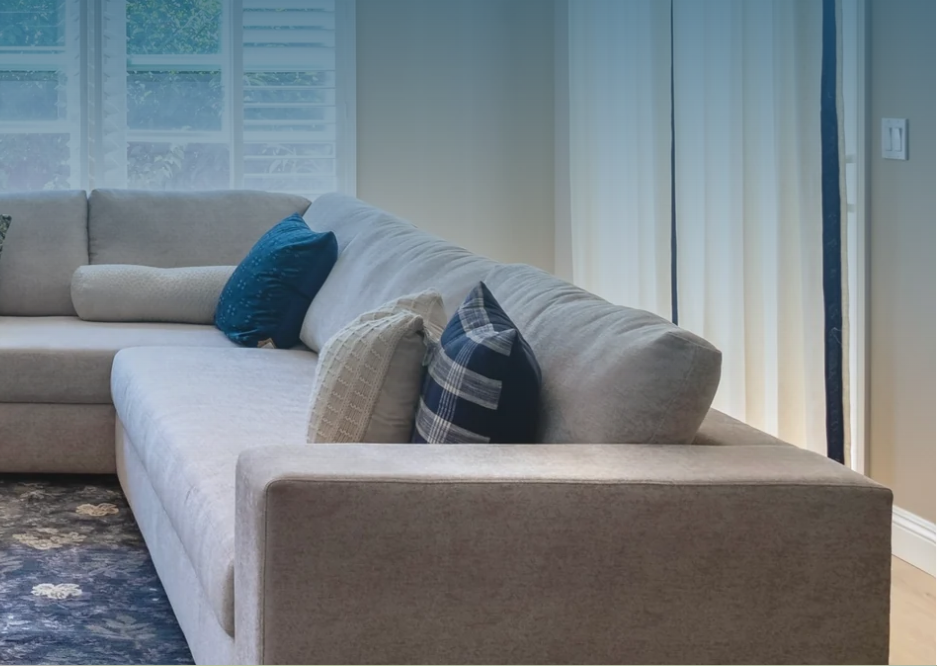
Standard sofa sizes don’t always match real rooms. You might end up with a sofa that’s a few inches too long, or one that’s too short and leaves an awkward gap. Luckily, a lot of brands let you pick the size.
Ashley is a good place to start if you’re on a budget. They have matching sofa and loveseat sets at a lower price. Crate & Barrel sells a lot of its sofas in more than one length, so it’s easier to find one that fits your wall.
Pottery Barn, West Elm, and Room & Board give you more choices. You can pick the size, the setup, and the fabric to fit your room. With Lovesac’s Sactionals, you can add pieces or move them around later if your space changes.
If you need something made to your exact measurements, What A Room builds sofas and sectionals to the width and depth you choose.
Wrap Up
The best oversized sofa is the one that fits your lifestyle and still leaves you breathing room. In a smaller room, an L-shaped sectional gets you the most seats, a sofa and loveseat combo gives you flexibility, and a three-cushion sofa keeps things simple. Medium rooms can handle a chaise or bumper sectional, and if you have a larger space, a U-shape, facing sofas, or a modular sectional can turn your living room into the spot where everyone wants to hang out.
And learn from my mistake…don’t eyeball it. Measure your room, figure out how many seats you need, and then have fun picking out what you love.


