

- TruBlue vs. Honey Homes: Which Home Maintenance Service Is Right for You? - September 30, 2026
- RANGER Pet Doors Reviews: What Owners Say After Living With One - September 8, 2026
I live in Michigan with big dogs, so a pet door is not a minor feature in our house. It is basically a hole in the exterior wall that gives the weather its own entrance, especially during winter.
So I started looking at more weather-resistant pet doors, and RANGER Pet Doors kept coming up. The company makes some big claims about air leakage and cold-weather performance, and the price is considerably higher than the basic pet doors you can pick up at a big-box store. I wanted to know what happened after people installed one and lived with it for a few years, especially somewhere with real winters.
I read through RANGER Pet Doors (formerly Freedom Pet Pass) reviews from owners in cold climates, windy areas, and multi-dog homes, along with discussions elsewhere online to determine what users really think.
What Keeps Coming Up in RANGER Pet Doors Reviews
Across the reviews, a few themes come up over and over:
- Cold-weather performance: Owners in cold and windy climates frequently mention the flap staying closed and reducing drafts.
- Magnetic closure: The stronger seal also means a heavier flap and a more noticeable snap than many pets are used to.
- Pet adjustment: Some dogs figure it out almost immediately; others need a few days and some treats.
- Installation: Door-mounted models are more approachable for experienced DIYers, while wall installations can become a much bigger project.
- Price: Plenty of owners hesitate at the upfront cost before buying.
- Longevity: Long-term owners report using the same door for many years, sometimes with replacement flaps or other wear parts.
- Parts and support: Owners with older doors mention responsive help and being able to replace worn or damaged parts instead of replacing the whole door.
RANGER’s own review page currently shows a very high average rating, so a large portion of the available feedback does come directly from the company. There are also independent discussions from owners on forums and Reddit, including people who say they have had the same door for a decade or longer.
I paid more attention to reviews from people who had owned the door for years, because they could speak to winter performance, wear, and whether replacement parts became necessary.
How Well Do RANGER Pet Doors Work in Cold Weather?
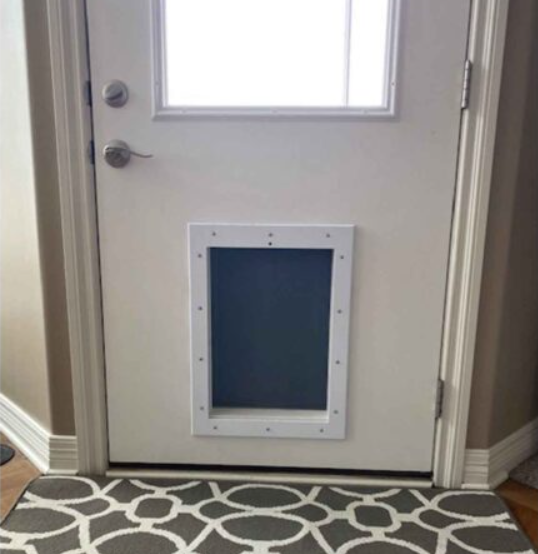
RANGER uses what it calls a DoubleMag seal, which holds the flap closed around the opening instead of relying on the flap to simply fall back into place. The company had the door tested under ASTM E283, which is a standard test used to measure how much air leaks through exterior doors and windows.
The result was 0.03 cubic feet of air per minute for every square foot of the door under the test conditions. That number does not mean much by itself, but lower is better. RANGER says it is about 15 times lower than the air-leakage requirement used for Energy Star-certified human doors (although RANGER Pet Doors are not Energy Star certified, because Energy Star does not currently certify pet doors).
The owner reviews give us a better idea of what that looks like outside the lab. In a testing environment, the door is installed under controlled conditions, and everything is carefully measured. Real houses are harder to account for, with different walls, installers, and kinds of weather, and plenty of opportunities for somebody to interpret an instruction a little differently than intended. I wanted to know whether owners were still seeing the same kind of seal once all of that got involved.
People in Minnesota, Canada, and Alaska repeatedly mention the flap continuing to close in low temperatures and staying shut during high winds. One Minnesota reviewer says the family owns several RANGER doors and uses them with dogs ranging from small breeds to dogs over 80 pounds. The doors reportedly have not frozen shut, but all of the cold-weather feedback is not completely uniform. One owner reported a flap or seal not staying fully closed in strong wind, so the magnetic design does not eliminate every possible sealing problem.
A reviewer in British Columbia reported the flap continuing to operate and seal after temperatures dropped to around -48°C. Another owner in that discussion said their door had been installed since 2014 and that they had replaced the flap once because it had become dirty, rather than because it had stopped working.
I like seeing a company make a claim and then finding owners describing the same thing in their own words. The lab result tells us the seal can perform under controlled conditions, and the cold-weather reviews make me feel better about how that translates once the door is installed in a real house.
Will Dogs Get Used to the Magnetic Flap?
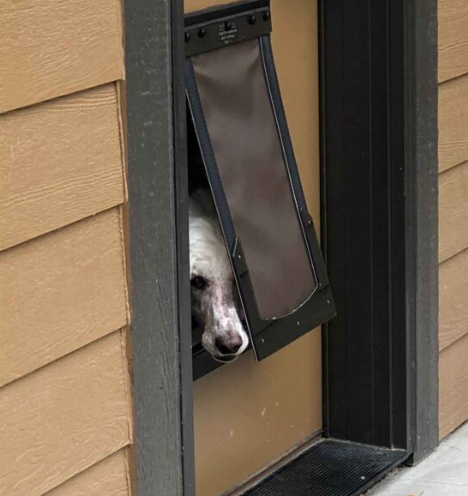
The stronger magnetic seal changes the experience for the dog as much as it changes the seal for the house. The flap is heavier than the loose vinyl style many pets already know, and because it is opaque, a dog cannot see straight through to the other side. Add the snap when the magnets reconnect, and there is a little more for a cautious dog to figure out the first few times through.
The owner reviews suggest that adjustment can be very individual. One Minnesota owner with rescue dogs said the sound did not become a problem for their pets, but they still recommend taking some time to train a dog through the new flap. Another reviewer said their dog needed roughly a week to get comfortable with it, in part because the old door had allowed the dog to see and feel the outdoors through the opening.
Then there are dogs who seem to decide treats are a perfectly acceptable reason to learn a new door. One owner said their 70-pound dog figured out the wall-mounted version after about four of them.
A little hesitation at first does not mean a dog is going to reject the door; it just means they might need some coaxing. With one of our more cautious dogs, I would start by holding the flap open and gradually lowering it as they got comfortable pushing through on their own.
How Difficult Is a RANGER Pet Door to Install?
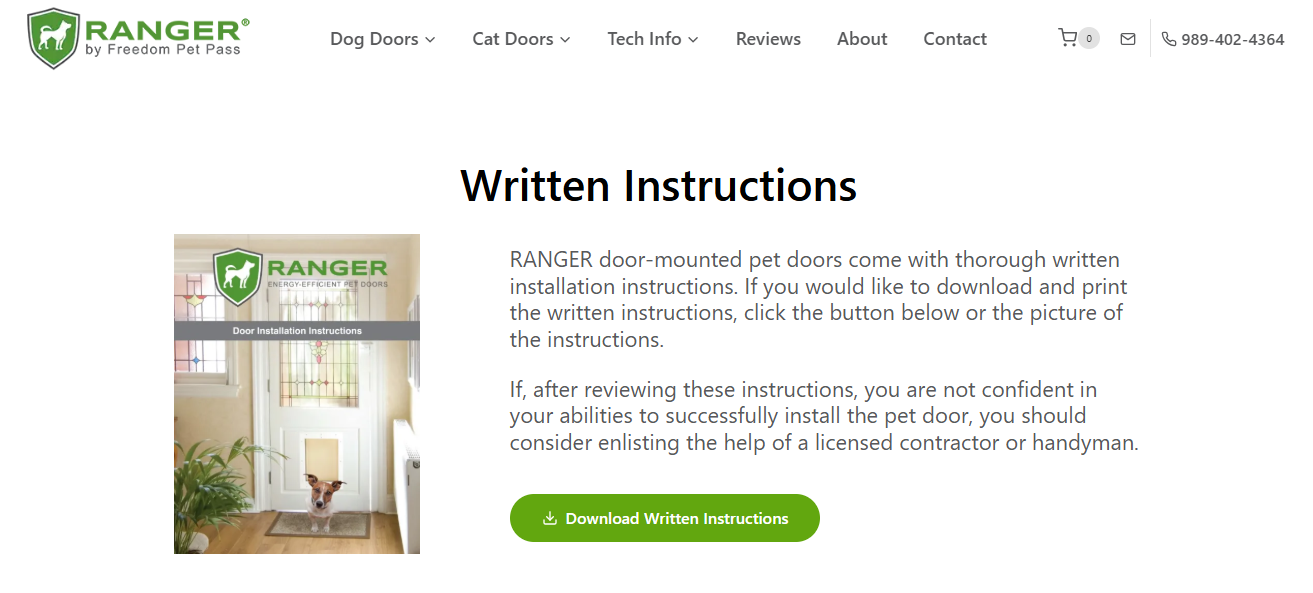
How involved the installation gets depends a lot on where the RANGER is going. The door-mounted version goes into an existing exterior door. You are still cutting a fairly large opening into a door you probably paid good money for, but owners who are comfortable using a saw and drill often report installing that version themselves. One recent reviewer said a handyman had no trouble installing the product into a standard-depth metal door and that cutting the opening was the most demanding part of the job.
A wall installation seems to be a much bigger job. RANGER’s instructions involve locating studs, checking for plumbing and electrical lines, framing a rough opening, cutting the exterior wall, sealing and insulating the opening, and finishing the trim. The company provides a detailed installation video series and recommends considering a licensed contractor or handyman if you are not confident doing that work. One experienced DIYer described a wall installation in stucco as much harder than expected and said cutting the opening alone took several hours.
Placement is part of that decision too, especially if you have an older dog. One owner realized after installation that arthritis made the opening harder for her dog to step through, so she added ramps and planned to lower the door. That is worth thinking through before cutting anything, because two dogs at the same weight can move very differently depending on their leg length, body shape, and mobility.
How Do RANGER Pet Doors Hold Up Over Time?
RANGER puts a lot of emphasis on repairability and long-term use. The company sells replacement flaps, flap seals, and other wear parts, and says it continues supporting older doors sold under the RANGER, Freedom Pet Pass, and SHIELD names. The doors also come with a three-year limited warranty covering manufacturing and material defects, although pet damage, improper installation, and abuse are excluded.
That kind of parts support is especially relevant with a pet door because the flap is the moving piece your dog is pushing through several times a day. It is also the part sitting out in wind, rain, snow, and sun, so being able to replace the flap or seal later is a lot better than having to replace the whole door.
One Reddit user said two roughly 100-pound dogs had been using the same door since 2016. At one point, the exterior flap was damaged when both dogs apparently tried to use the opening at the same time, which feels like exactly the sort of durability test two giant dogs would come up with. The owner said RANGER sent a replacement. Another commenter said a door purchased in 2014 was still operating properly a decade later.
One owner using a wall-mounted RANGER with four dogs in an Arctic climate said the rivets on an exterior flap eventually pulled through. They keep a spare flap on hand and also spoke positively about the company’s response when help was needed.
If one of our dogs eventually damages a flap, I would much rather replace that piece than find out the whole door has to come out of the wall.
Is a RANGER Pet Door Worth the Price?
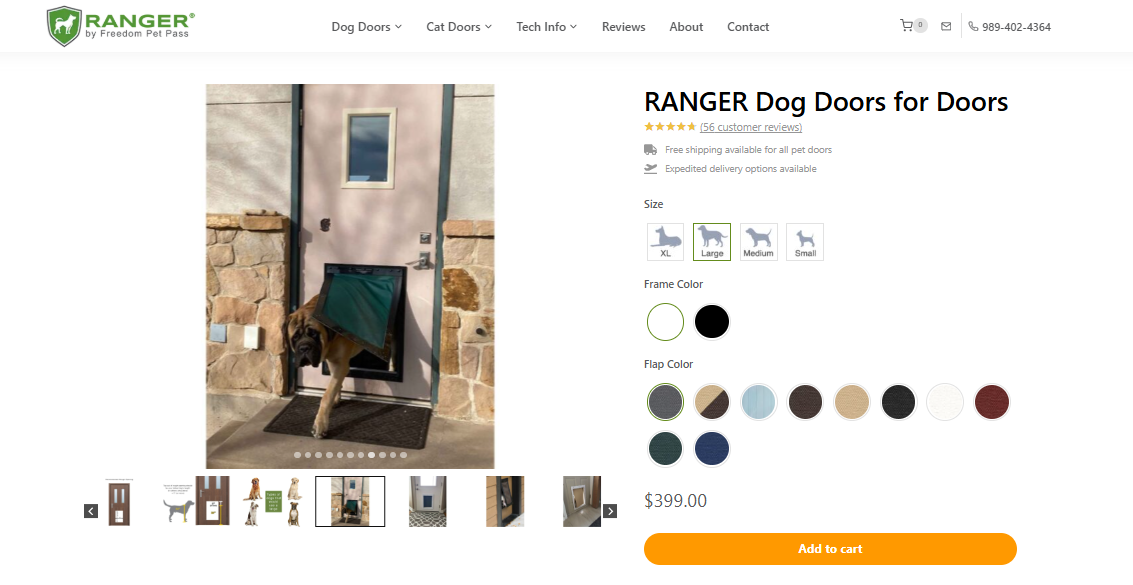
Price comes up a lot in the reviews, which is not surprising. RANGER’s starting price is about $399 for a door-mounted dog door, so this is not the kind of pet door you toss into the cart without thinking about it.
Energy savings alone are a shaky way to justify the price. Some owners say they noticed lower heating or cooling use after replacing a draftier door, but there are too many variables in a house to promise that your utility bill is going to drop by a certain amount.
Before spending that much, I would look at what your current pet door is doing wrong. If it seals fine, stays closed, and you live somewhere with mild weather, there may not be much reason to replace it with a RANGER. If you are already replacing flaps, dealing with drafts, or fighting a door that stiffens up every winter, the extra cost is easier to justify.
Are RANGER Pet Doors a Good Choice for Cold-Weather Homes?
At our house, Michigan winters put weather performance pretty high on the list. Our dogs need to be able to get outside without turning us into full-time door attendants. I would just prefer not to offer winter weather the same freedom.
What is encouraging is how often the things RANGER says about sealing and cold-weather performance show up again in owner reviews, especially from people who have been using the doors for years. Some owners still report difficult installs or parts that eventually need replacing, but seeing the same cold-weather performance come up again and again gives me a lot more confidence than a product page making those claims on its own.


