

- What A Room vs. Room & Board: A Custom Sofa Comparison - September 11, 2026
- Best Custom Sofa Companies: A Buyer’s Guide - August 18, 2026
- Best Quick-Dry Towels for Everyday Use - August 13, 2026
Home repairs can be such a headache. I’m a busy single mom with two teens, and I always have a running list of little things that need to be done around the house. Either I can’t do them, don’t know how, or I don’t have time. It’s not a lot of stuff, but the list keeps growing. Sound familiar? Do you have a regular handyman you use? I wasn’t sure if I needed a handyman or a contractor. Or maybe a membership handyman service to always have on the ready? There’s not really a right or wrong answer; it just depends on what’s on your list, how often you might need the help, the cost, flexibility, and the value of consistency.
The Traditional Handyman

Hiring a handyman the traditional way is simple in theory. You have something that needs to be fixed, you find someone either by a referral, Google, Yelp, Nextdoor, wherever. You get a quote for your job, a handyman comes out and does the work, you pay for said job, and that’s it. It’s transactional, it’s fixed, that’s it. No ongoing commitment; that relationship can be over, and you’re free to look elsewhere in the future. Some people want that. You’ve got one project: hanging shelves, fixing minor drywall holes in the wall, a leaky faucet, nothing big and nothing ongoing. You call someone, they do the job, you pay, done.
But the per-job model has friction points that don’t show up until you’re actually living with them:
Availability is inconsistent. Good handymen tend to be booked out, and the ones with immediate openings aren’t always the ones with the best reviews. You’re often choosing between “available soon” and “actually good,” not both.
Pricing varies a lot, and it’s not always transparent. Hourly rates swing widely by region and by contractor, and you often don’t know the total until the job’s done. Some homeowners, particularly women or seniors handling home repairs on their own, may worry about whether the quote they’re getting is the same one anyone else would get. I know that thought has crossed my mind.
Every job starts over. A new handyman each time you have something to be fixed doesn’t know your house. They don’t know that your water shutoff is behind a weirdly placed cabinet, or that the last person who touched your electrical panel did something questionable. You’re re-explaining context every time, and there’s no accumulated understanding of your home’s quirks.
Someone new is in your house each time. For those living alone or juggling a household solo, it’s not the same having a stranger show up versus someone you already know and trust.
None of this makes traditional handymen a bad option. It just means the model is built around single transactions, not necessarily relationships.
The Membership Model

Services like Honey Homes flip the structure. Instead of paying per job, you buy a block of time upfront, in the form of visits, and you’re paired with one dedicated handyman who comes back for each one.
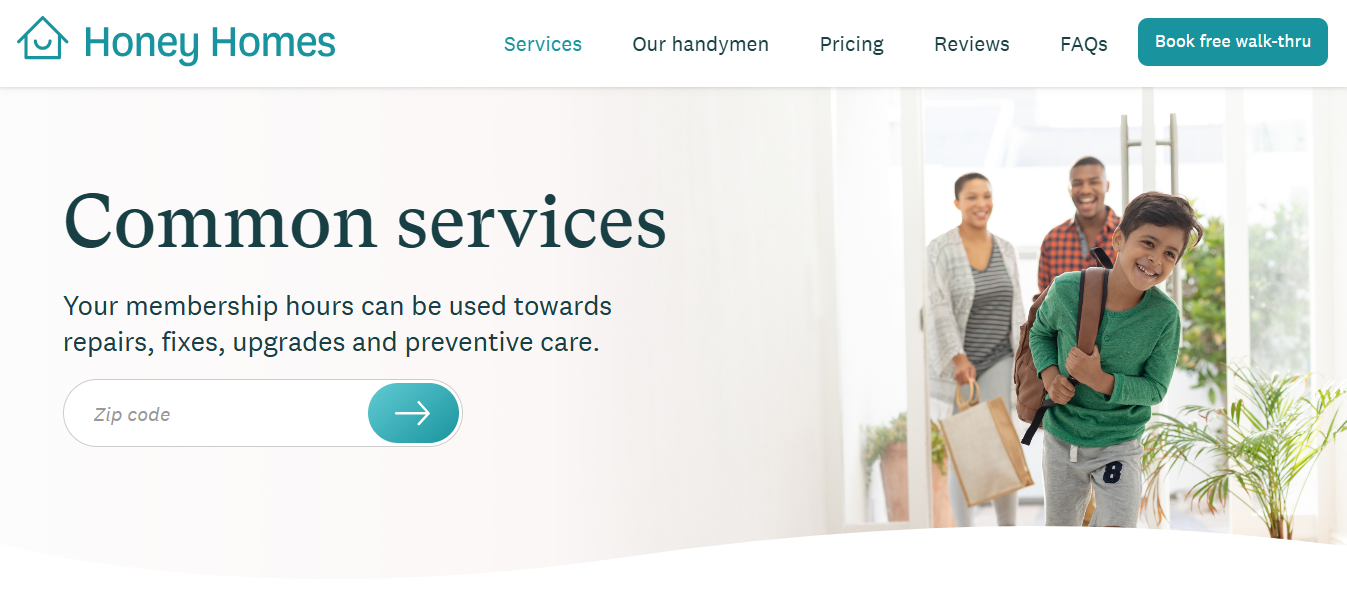
Honey Homes structures this in tiers. A Starter Pack gets you 3 visits (5.25 hours total) for $595, or 10 visits (17.5 hours) for $2,000, both billed upfront, working out to $114 an hour. If your list is longer, the Busy Home plan is 20 visits a year (35 hours) for $3,500, which can be paid upfront or split into two installments, bringing the rate down to $100 an hour. You can use the visits however you want: stacked together to knock out a bunch of projects, or spread across the year for ongoing work and upkeep.
What’s Actually Included Beyond the Labor:
- One dedicated, vetted handyman assigned to your home
- A mobile app for booking visits, tracking progress, and messaging support
- Preventive maintenance suggestions tailored to your house
- Access to partner discounts on things like parts and services
- Parts and supplies shopping support
- A 30-day satisfaction guarantee
Honey Homes hires its handymen as full-time employees, not independent contractors and not gig workers pulled from an app. That’s a meaningful difference from a lot of “on-demand” home service platforms, which often function more like a dispatch layer connecting you to whoever’s available. A full-time employment model means the person coming to your house likely has benefits, ongoing training, and reasons to stick around, and it’s part of why you’re more likely to see the same face visit after visit instead of a rotating cast.
You’re really paying for that consistency as much as the labor itself. A handyman who’s been to your house four times already knows where the breaker box is, remembers what you mentioned in passing last visit, and starts noticing things you didn’t ask about. You’ve built a relationship with this person.
Who This Is and Isn’t for

Maintenance memberships like Honey Homes aren’t right for everyone and every job.
Anything that legally requires a licensed contractor is outside what most of their employees can do. Large-scale renovations, structural work, big electrical jobs, anything requiring permits, that’s still a job for a contractor. The membership is built for the maintenance and repair tier below that, not for replacing a contractor relationship entirely.
It’s also geographically limited. This isn’t available everywhere yet, so if you’re outside their service areas, the question is moot.
And the upfront payment structure, while transparent, is a bigger ask than “pay after the job’s done.” You’re committing to a block of hours before you know exactly how they’ll all get used, which requires more trust upfront than calling a one-off handyman for a single task. But if you have a never-ending list of small tasks, it could be a good fit.
The Tasks Each One Handles Best
Traditional Handyman, One-Off, Makes Sense for:
- A single, well-defined job with a clear scope
- Urgent or one-time repairs where you don’t anticipate needing help again soon
- Situations where you already have a trusted handyman on call
- Anyone who genuinely prefers not to commit to anything ongoing
A Membership Model Like Makes More Sense for:
- A running list of smaller tasks that keeps growing faster than you can address it
- Preventive maintenance you don’t have the time, tools, or knowledge to handle yourself
- Homeowners who want the same person to build familiarity with their house over time
- Post-renovation loose ends that were never big enough to justify calling the general contractor back
That last one is worth pointing out, because it happens more than people expect. A renovation wraps up, the big stuff gets done, and then there’s a residual list of small things that fell off the priority list: caulking that needs redoing a year later, a vent that never quite fit right, drywall cracks from the house settling, paint touch-ups where the original color’s been discontinued. None of it is expensive enough or urgent enough to call your contractor back for. It’s also not always easy to find a handyman willing to take on a scattered list of small jobs instead of one clean project.
That’s really what the membership model is built for: not the big stuff, and not a true one-off job, but that backlog of small things that needs a consistent, trusted person to just work through the list.
The Upside to the Same Handyman

This part is easy to overlook, but it matters: a handyman who’s been in your house multiple times starts catching things you didn’t think to ask about. A dishwasher that’s not cleaning dishes the way it used to gets flagged and cleaned out before you’re shopping for a replacement. A dryer vent that’s never been cleaned and is quietly a fire hazard gets caught during a visit for something unrelated. That kind of catch doesn’t happen with a stranger who’s in and out in an hour and has no reason to look past the task on the work order.
It also changes the emotional experience of home repairs, which doesn’t show up in a pricing comparison but matters in practice. Knowing who’s walking through your door, instead of vetting a new name every time, removes a layer of friction that a lot of people, especially those managing a household on their own, don’t fully register until it’s gone. I also think this matters when you’re caring for an elderly parent or friend. You want to know who’s in their house. You don’t want them trying to do the work themselves and potentially getting hurt, or calling someone they’ve never met.
So Which One Is It?
If your list is short, specific, and unlikely to grow, a traditional handyman is fine and probably the more economical choice; you’re not paying for a relationship you don’t need. But if you’ve got a long list of work that keeps growing, want someone who actually gets to know your home, and would rather have pricing spelled out upfront than negotiate it job by job, a membership model is probably the better fit.
Neither model is a downgrade from the other. They’re built for different problems and different people. The first step is being clear about which problem you actually have: a one-off fix, or a list of projects and ongoing upkeep.


