

- Signs You Should Switch Your House Cleaning Service - October 14, 2026
- The Best Faucet Mount Water Filters of 2026: Which One Should You Buy? - September 29, 2026
- Best Mattress Topper - September 25, 2026
Renting an apartment can make even a simple home upgrade a little more complicated. If you own your home, installing an under-sink reverse osmosis system, swapping out a faucet, or making another plumbing modification is usually a matter of deciding whether you want to do it.
As a renter, you also have to think about your lease, your landlord, and whether the upgrade is worth installing if you might be moving again in a year or two.
Fortunately, you don’t have to make permanent changes to get better-tasting or filtered water. There are several renter-friendly options, including countertop reverse osmosis systems, water filter pitchers and dispensers, and faucet-mounted or direct-connect filters.
Each one has its own advantages, so the best choice really comes down to how much filtration you need, how much space you have, and how much installation you’re willing to deal with.
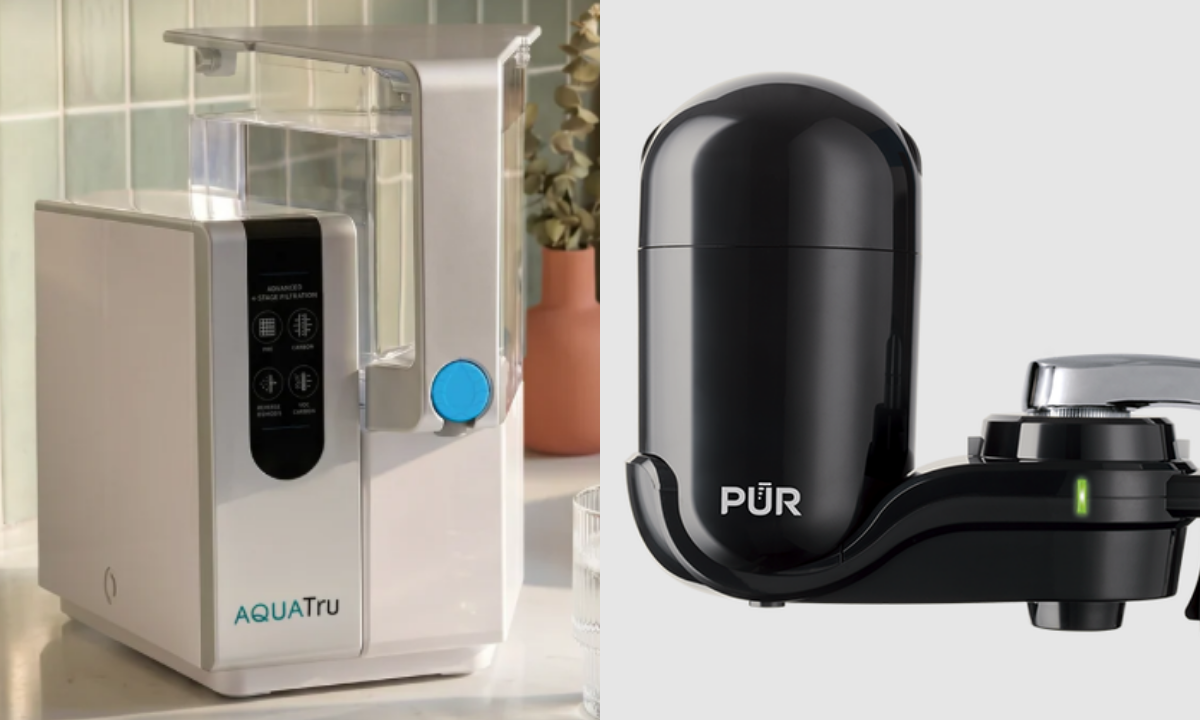
For most renters who want something simple and convenient, a faucet-mounted filter is a particularly appealing middle ground. If your faucet is compatible, the PUR PLUS Faucet Mount Filter offers filtered water directly from the tap without requiring an under-sink installation or taking up valuable refrigerator or counter space.
1. Best Budget Option: Water Filter Pitcher
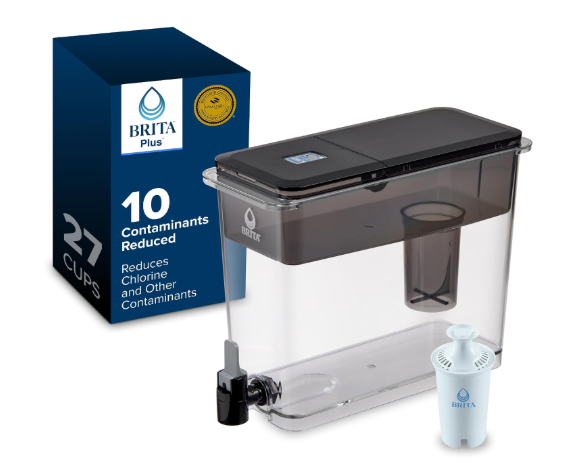
Sometimes the most renter-friendly water filter is also the simplest: a pitcher.
Water filter pitchers are inexpensive, require no installation, and don’t care what kind of faucet you have. You fill the reservoir, let the water run through the filter, and put the pitcher in the refrigerator. There’s no landlord approval, plumbing work, or countertop appliance involved.
That simplicity makes a pitcher particularly appealing if you’re living in a temporary apartment, move frequently, or simply don’t want another device attached to your faucet. The downside is that you have to remember to keep it filled, which can become annoying if you’re drinking a lot of water throughout the day.
Refrigerator space can also be an issue. A full-size pitcher takes up a surprisingly significant amount of room, especially if you’re already sharing a refrigerator with a roommate or trying to fit groceries into a small apartment kitchen.
That’s where slim pitchers and larger dispensers can make more sense depending on your household. A compact pitcher is usually plenty for one person, while a larger dispenser can be more practical for couples, roommates, or families who go through filtered water quickly.
Just remember that “water filter pitcher” isn’t a single filtration category. Different filters reduce different contaminants, so check the certifications and contaminant-reduction claims for the specific model you’re considering. If your goal is primarily improving taste and reducing chlorine, you have plenty of affordable choices. If you’re concerned about something more specific, such as lead or PFAS, look for a filter certified to reduce that contaminant.
2. Best for Maximum Filtration: Countertop Reverse Osmosis
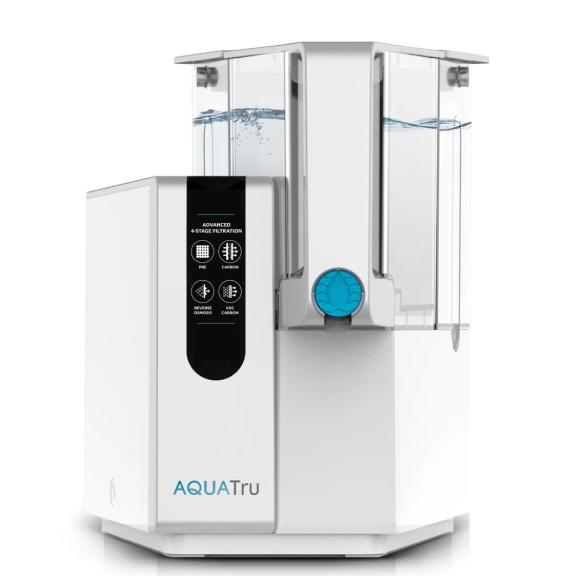
If convenience isn’t your top priority and you’re more concerned with getting comprehensive filtration, a countertop reverse osmosis system is worth considering.
Countertop RO systems essentially give renters access to the type of filtration they might otherwise associate with an under-sink system, without requiring permanent plumbing modifications. Instead of connecting the system underneath your sink, you keep it on the counter, fill its reservoir with tap water, and let the system process the water.
AquaTru is one example of a brand commonly found in this category. Countertop RO systems can be especially appealing if you’re dealing with a particular water-quality concern and want a more comprehensive filtration process than a traditional carbon-based pitcher or faucet filter provides.
The tradeoff is convenience. A countertop RO system takes up space, requires electricity, and means you’re filling a reservoir rather than simply turning on your faucet. Depending on the model, filtration can also take some time, and reverse osmosis systems may produce wastewater during the filtration process.
None of those things necessarily make countertop RO a bad choice. They’re just worth considering before you decide that “no plumbing installation” automatically means “no hassle.”
For someone living alone in a small apartment who has a specific reason for wanting RO filtration, a countertop system can be a great fit. But if your primary complaint is that your tap water tastes strongly of chlorine, a countertop RO system may be considerably more technology and expense than you actually need.
3. Best Overall for Most Renters: PUR PLUS Faucet Mount Filter
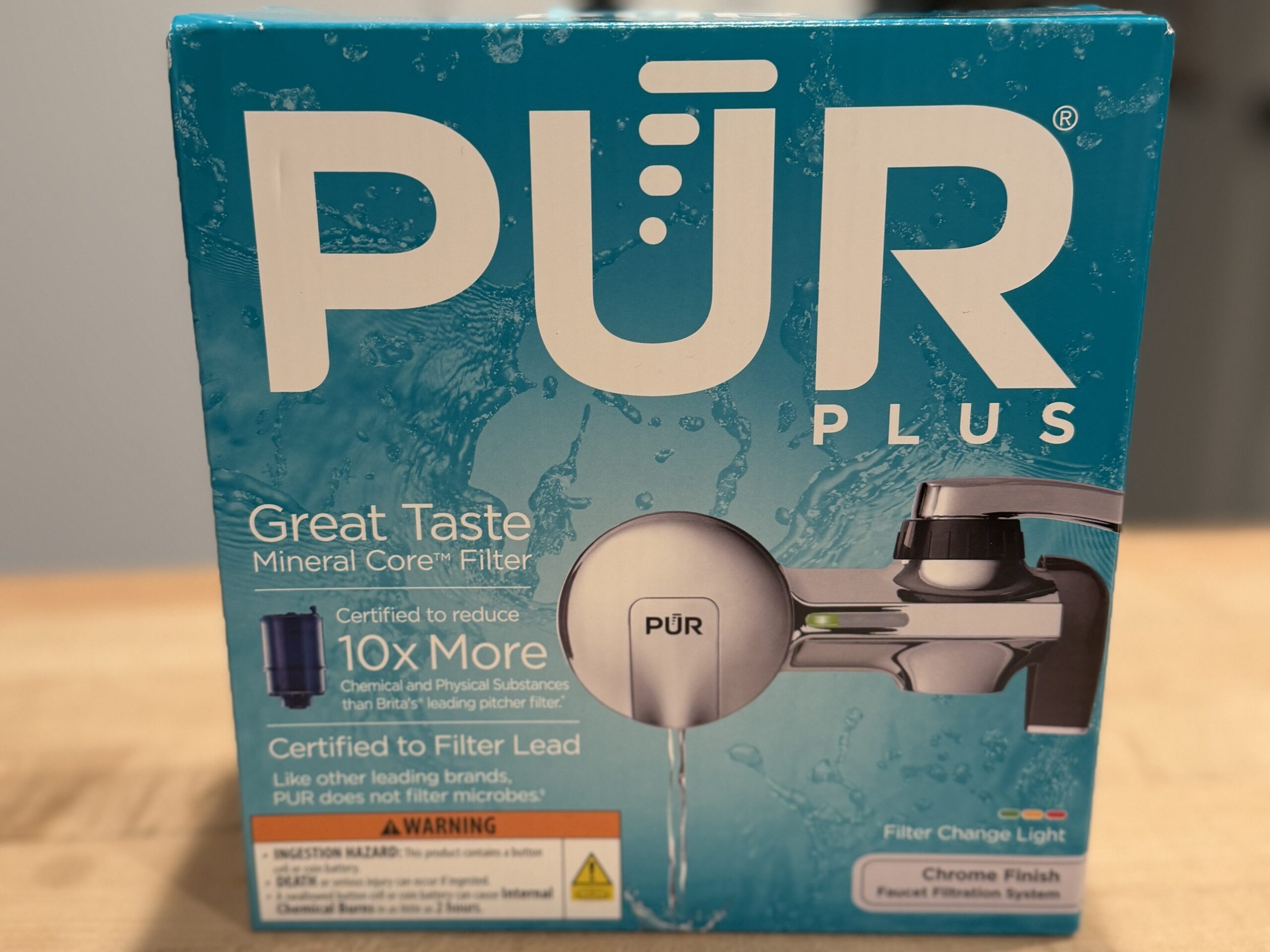
For renters who want filtered water without turning their kitchen into a plumbing project, the PUR PLUS Faucet Mount Filter is one of the most practical options to consider. The system attaches directly to a compatible standard faucet, doesn’t require permanent plumbing modifications, and lets you switch between filtered and unfiltered water using the system’s lever.
That last part is more useful than it might sound. You probably don’t need filtered water to wash dishes, rinse vegetables, or wash your hands, but you may want it for drinking, filling a reusable bottle, making coffee, or cooking. Being able to turn filtration on only when you need it means you’re not unnecessarily running every gallon of water through the filter.
The other big advantage for renters is the installation. PUR’s faucet systems are designed to attach to compatible standard faucets without tools, although you’ll need to remove the existing aerator and make sure the faucet’s threading is compatible.
There is an important catch: PUR faucet systems aren’t designed for pull-out or handheld faucets. If your kitchen has a pull-down or pull-out spray faucet, check the manufacturer’s compatibility information before buying rather than assuming the filter will fit. A two-minute compatibility check is a lot easier than dealing with a return after you’ve already opened the package.
What Does the PUR PLUS Filter Reduce?
The current PUR PLUS faucet filter is certified to reduce 70 contaminants and substances, including lead, microplastics, total PFAS, VOCs, chlorine, and mercury. PUR also states that its filters do not filter microbes, which is an important distinction when you’re deciding what type of water treatment you actually need.
In other words, a faucet filter shouldn’t be viewed as a universal solution to every possible water-quality concern. If you’re worried about a specific contaminant, check your local water-quality report and compare it with the exact contaminants the filter is certified to reduce.
For renters who primarily want better-tasting tap water while also reducing a broad range of common contaminants, however, the PUR PLUS offers a convenient combination of filtration and everyday usability.
Faucet Mount vs. Countertop RO: Which Is Better for Renters?
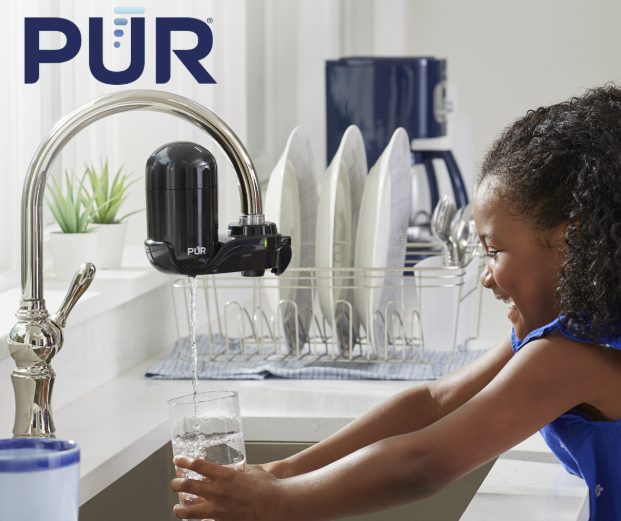
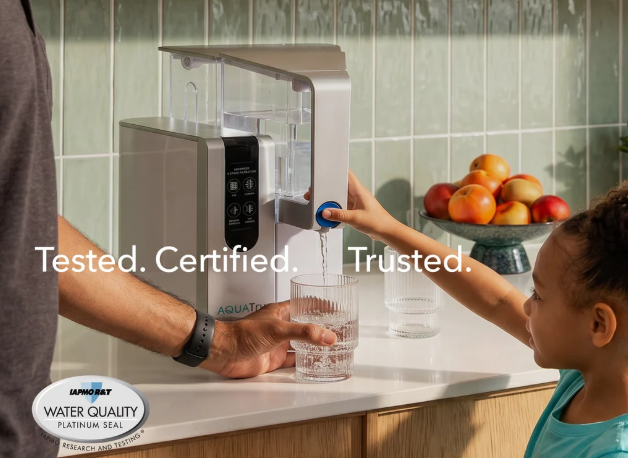
A faucet-mounted filter is smaller, simpler, and generally less expensive. You get filtered water immediately from the faucet, don’t have to fill a reservoir, and don’t have to give up counter space. The tradeoff is that you’re limited by your faucet’s compatibility and the level of filtration offered by the specific filter.
Countertop RO systems go in the opposite direction. They’re larger and require more involvement, but they offer a more comprehensive filtration process without requiring permanent plumbing changes.
A good rule of thumb is to start with your actual priority. If convenience is the most important thing, a faucet mount makes sense. If you’re specifically looking for more comprehensive filtration and don’t mind giving up counter space, look at countertop RO. And if keeping the cost and setup as simple as possible is your goal, a pitcher is probably the better choice.
What Does “No-Install” Actually Mean?

One thing to be careful about when shopping for renter-friendly water filters is the phrase “no installation required.” It sounds like you’ll take the product out of the box, turn it on, and immediately have filtered water, but every type of system involves at least some setup.
A pitcher needs its filter installed and usually needs to be flushed before use. A countertop RO system needs to be assembled, plugged in, filled, and maintained. Even a faucet-mounted filter requires you to remove the faucet aerator and attach the filtration system.
The PUR faucet system, for example, requires you to remove the existing aerator and washer and determine the faucet’s threading before attaching the device. The good news is that compatible standard faucets can be fitted without tools, making the process considerably simpler than an under-sink installation.
So when you’re shopping as a renter, think of “no-install” as no permanent installation, rather than literally no setup.
What Will Your Landlord Allow?
Before installing any water filtration system, take a quick look at your lease. The safest options are generally the ones that don’t require permanent changes to the property.
A pitcher doesn’t interact with your plumbing at all, while a countertop RO system can sit on the counter without requiring a permanent connection. Faucet-mounted systems are also removable, although they do attach directly to the faucet.
Under-sink systems are where things get more complicated. Depending on the system, you may need access to the water supply, a drain connection, or a dedicated faucet, and some installations may require drilling or other modifications.
Even if you’re confident that you could restore everything when you move out, don’t assume that means the modification is automatically permitted. If an installation involves permanent changes, it’s worth asking your landlord or property manager for approval and keeping that approval in writing.
It’s a lot easier than finding out at move-out that the installation violated your lease.
What About Direct-Connect Filters?
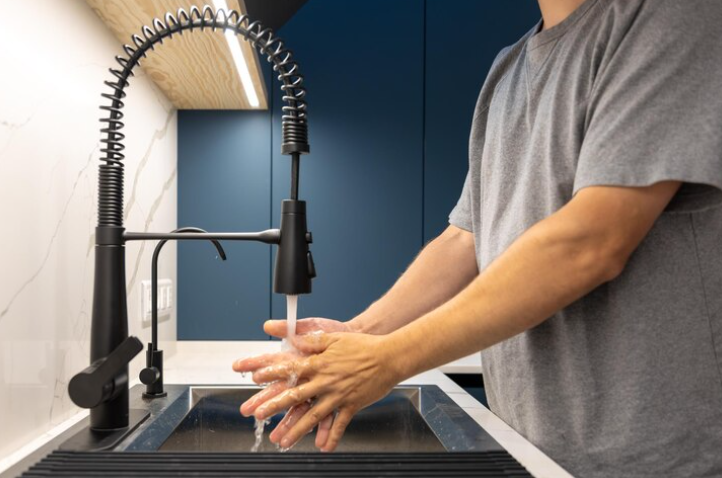
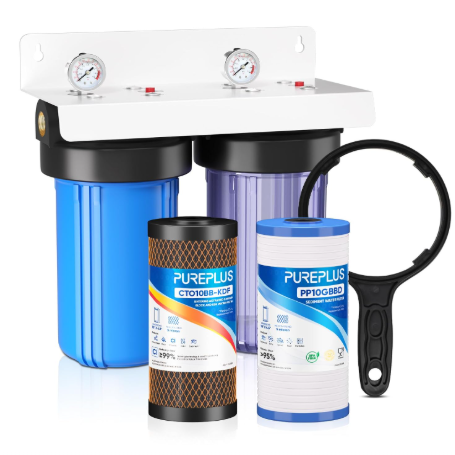
Direct-connect filters sit somewhere between a faucet-mounted filter and an under-sink system. Instead of attaching directly to the faucet, they connect to the existing water line, allowing you to get filtered water without having to fill a pitcher or keep a filter attached to the faucet itself.
The appeal is obvious: you get a cleaner, more permanent-feeling setup without necessarily installing a full under-sink filtration system. The downside is that some direct-connect systems still require access to the plumbing underneath the sink, which can make them less appealing for renters.
For that reason, I’d treat direct-connect systems as a “check your lease and plumbing first” option rather than the default recommendation for renters. If your goal is to avoid touching the plumbing entirely, a faucet mount or countertop system will generally be simpler.
How Much Should You Spend on a Rental Water Filter?
There’s no reason to spend several hundred dollars on filtration if your only goal is making your tap water taste better.
A basic pitcher or faucet-mounted filter can be a much more sensible choice for that situation. On the other hand, if you’re dealing with a particular water-quality concern and specifically want reverse osmosis filtration, paying more for a countertop system may be justified.
The key is to start with the water rather than the product.
Check your local water-quality report and figure out what contaminants are actually present in your water supply. Then look for a filtration system that’s certified to reduce the contaminants you’re concerned about.
That approach is much more useful than buying the most expensive filter simply because it has the longest list of features. More filtration isn’t automatically better if it doesn’t address the issue you’re actually trying to solve.
Don’t Forget Replacement Filters
The initial purchase price is only part of what you’ll spend on a water filtration system. Every filter eventually needs to be replaced, and different systems can have very different maintenance schedules and long-term costs.
The current PUR PLUS faucet filter is designed to filter up to 100 gallons or last up to three months, and PUR recommends replacing it every three months for best performance.
When you’re comparing systems, look beyond the price of the unit itself and calculate what you’ll spend on replacement filters over a year. A system that seems inexpensive upfront can become more expensive if it requires proprietary cartridges several times a year, while a slightly more expensive system may have more affordable replacement filters.
This is particularly important for renters because the whole point of choosing a simple filtration system is usually to keep the setup and the ongoing costs manageable.
So, What’s the Best Water Filter for a Rental Apartment?
For a renter with a compatible standard faucet who wants convenient access to filtered water without modifying the plumbing, the PUR PLUS Faucet Mount Filter is a strong overall option. Its tool-free installation on compatible faucets, removable design, and broad contaminant-reduction claims make it a practical fit for a rental kitchen.
If your priority is the most comprehensive filtration you can get without installing an under-sink system, a countertop reverse osmosis system such as AquaTru is worth considering. Just be prepared to give up some counter space and deal with a little more maintenance.
For the lowest-cost, lowest-commitment option, a water filter pitcher remains hard to beat. It’s especially useful if you don’t have a compatible faucet or don’t want anything attached to your kitchen fixtures.
Direct-connect and under-sink systems can also work for some renters, but they’re better suited to situations where you’ve confirmed that the installation is permitted and you’re comfortable dealing with the plumbing.
That’s why a simple, removable system can be more useful than the most sophisticated filtration setup available.

