


- Best Custom Sofa Companies: A Buyer’s Guide - August 18, 2026
- Best Quick-Dry Towels for Everyday Use - August 13, 2026
- What A Room vs Arhaus: Which Custom Sofa Brand Is Right for You? - August 8, 2026
If you’ve been shopping for a new sofa, West Elm is probably already on your list. It’s one of the Williams-Sonoma family of brands (alongside Pottery Barn, Crate & Barrel, and CB2), sitting in the upper-to-mid price range with a mostly contemporary or mid-century modern look.
Those names, plus retailers like Macy’s, tend to be the default starting point for anyone shopping for sofas.
But let’s add a different brand into that mix: What A Room. It’s less of a household name, but worth knowing about for one big reason: customization. That’s something none of the brands above really offer, since their sofas come in fixed configurations, fabrics, and sizes.
We’ll compare the two on the things that actually matter once you’re past the marketing photos: build quality, fabric options, and how each one is actually made.
1. Customization: Fully Custom vs. Configurable
West Elm
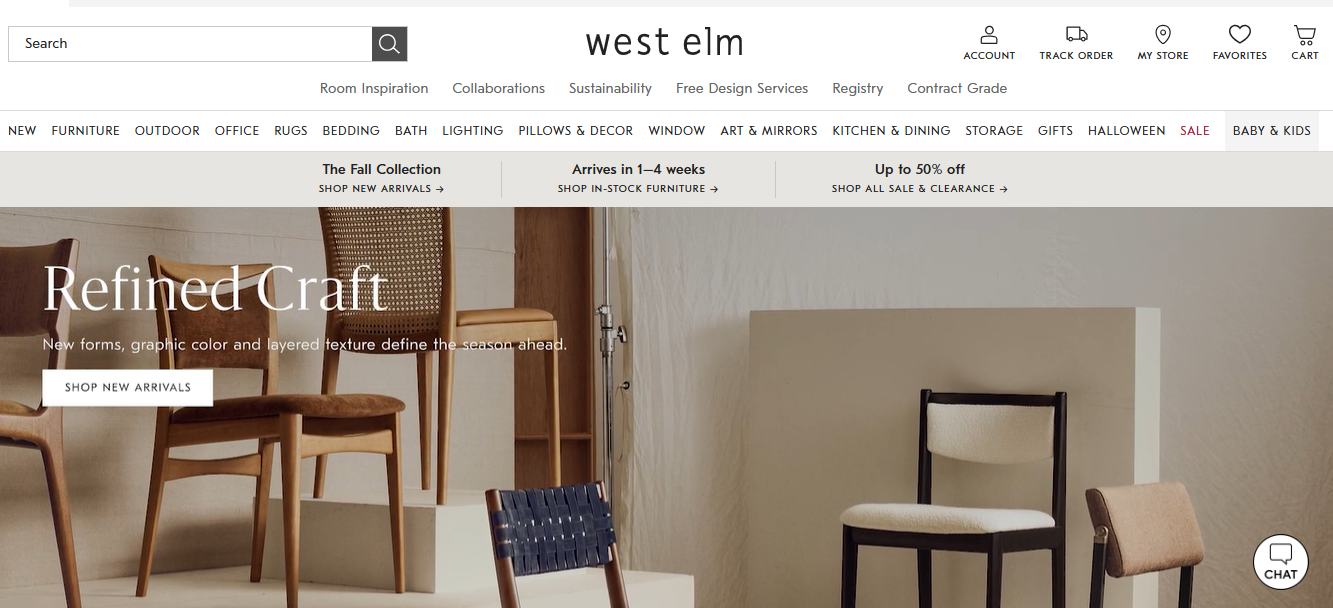
West Elm uses a Build Your Own program. You pick a collection, then choose from a set of pre-built modules (left-arm sofa, corner piece, right-arm sofa, etc.) and combine them into a configuration.
You’ll also choose a fabric and color from the options available for that specific line. West Elm’s site also has a room planner tool that shows your configuration in 3D, and lets you filter its catalog by size, material, seat cushion firmness (soft, medium, firm), and seating capacity (2, 3, 4, or 5 seats).
The frame sizes themselves, though, are fixed, which means that you’re combining pre-built pieces, not changing their dimensions.
What A Room
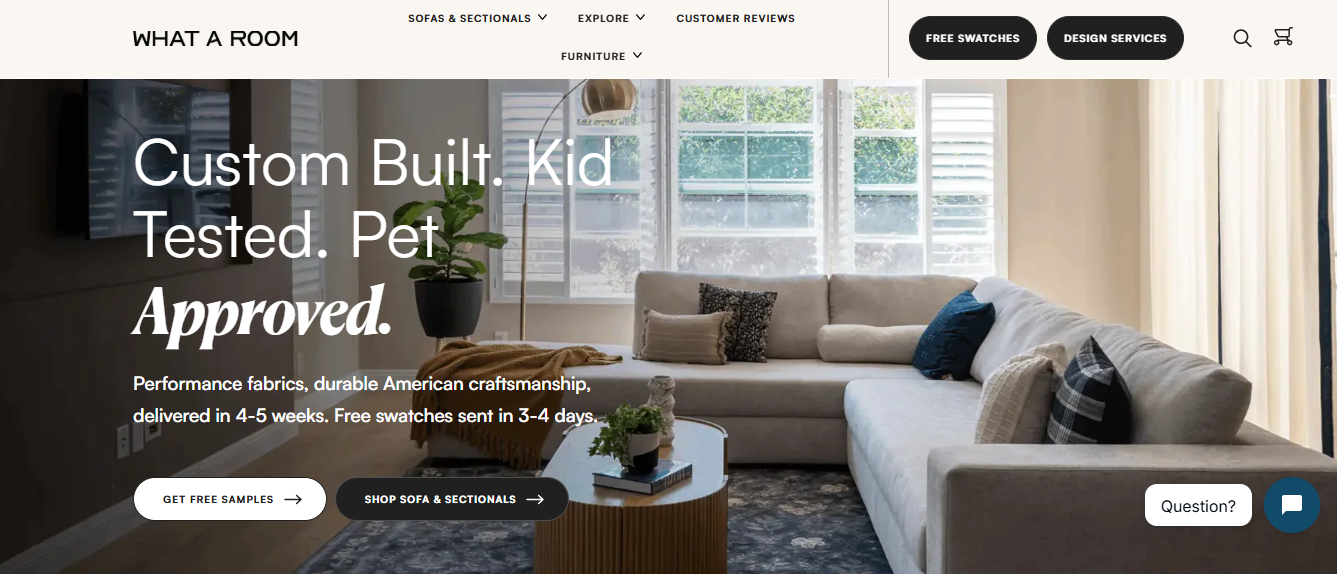
What A Room customizes the sofa itself: size, seat depth, cushion firmness, and fabric are all adjustable, and the team will work directly with you on dimensions that fall outside the standard online configurator, like a specific depth, or a size built around an odd corner or a window.
On most designs, sofa width can be selected anywhere from 60 to 100 inches, and product pages show live pricing that updates as you adjust dimensions and materials, so you can see the cost impact of each change as you build the piece rather than getting a quote after the fact.
If you want something outside what the configurator shows, like an adjusted seat height or a modified back frame, you can add those requests directly in the notes section at checkout, and the team will review and confirm feasibility with you before production starts.
For anyone nervous about ordering a custom piece sight-unseen, What A Room also offers a free design consultation where you share your room dimensions and configuration ideas, and the team builds a 3D rendering of the finished piece in your actual space before you commit.
One caveat worth flagging is that because these are custom, made-to-order pieces, What A Room can’t accept cancellations or returns once an order includes custom selections or non-stock fabric, so it’s worth being confident in your choices before finalizing!
2. Design Support
West Elm
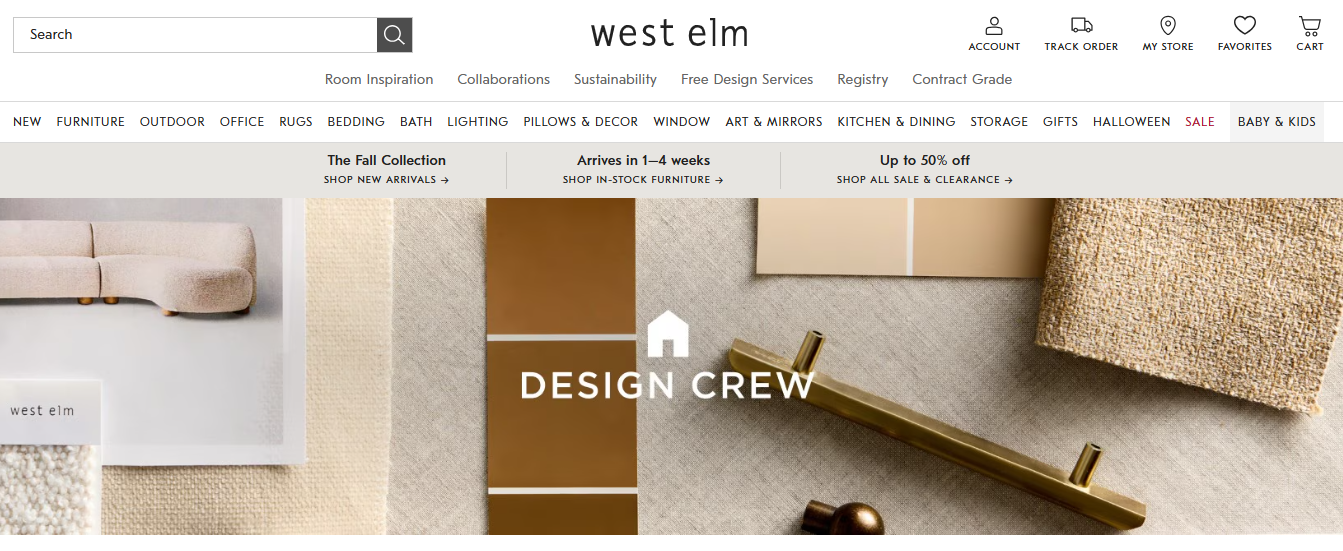
West Elm offers free design appointments in three formats: in-home, virtual, or in-store. A design expert reviews your project goals, then follows up with mood boards, product recommendations, a customized room plan, and cost estimates. Since West Elm also sells living room, dining and kitchen, bedroom, and home office furniture, one appointment can cover a whole room or home, not just a sofa.
What A Room
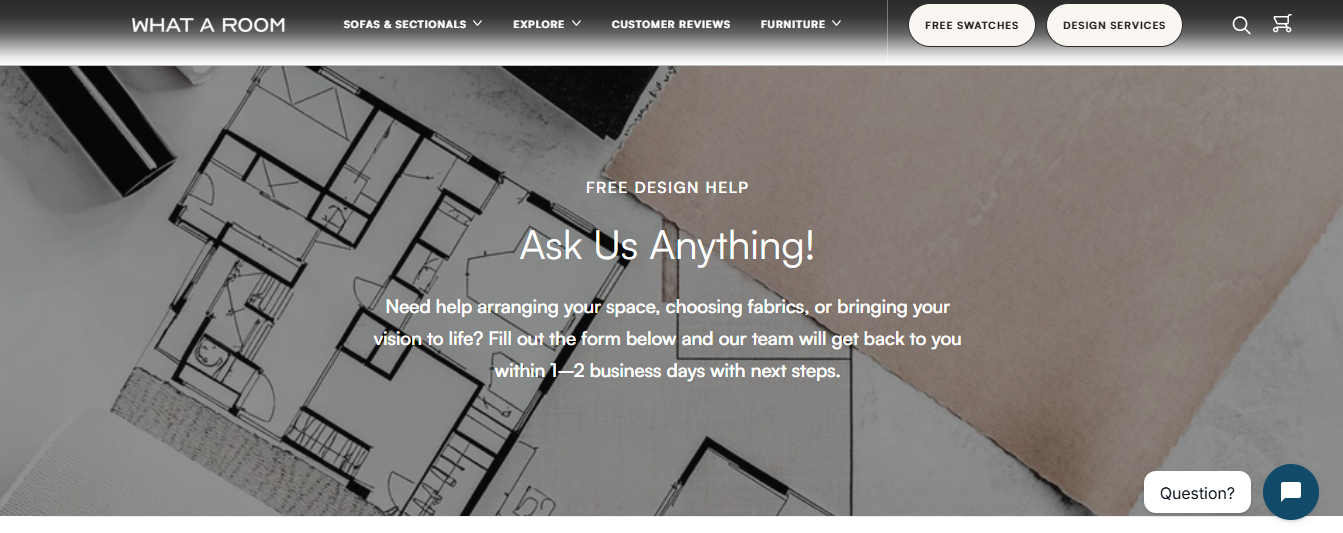
What A Room’s design support is sofa-specific: the team works directly with you on sizing, configuration, and fabric selection, including custom dimensions outside the standard online options. What A Room does sell other furniture too, but its focus stays on custom sofas.
3. Build and Materials
What A Room
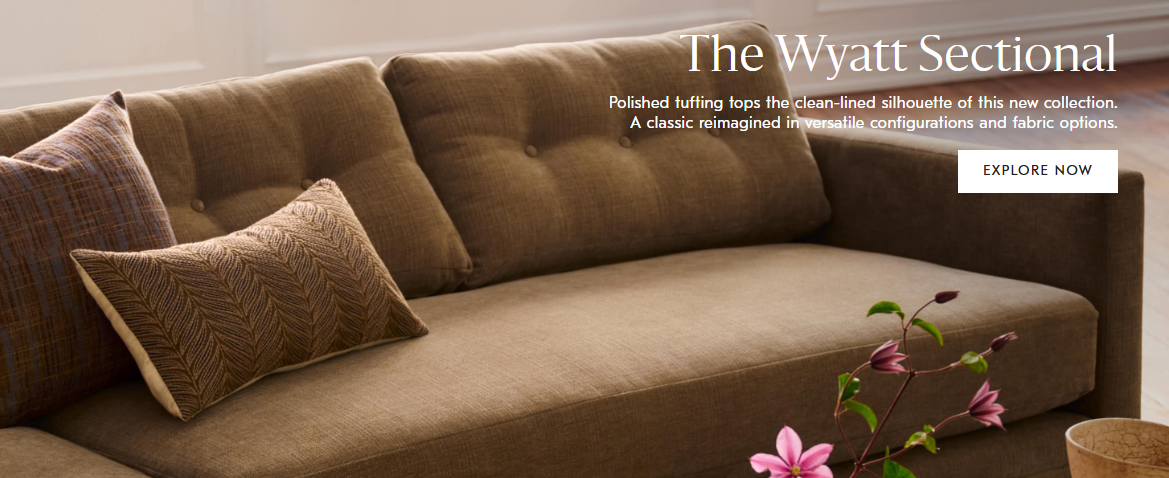
What A Room uses a kiln-dried solid wood frame and 2.5 lb high-resiliency foam in its seat cushions, a density more commonly found in commercial furniture than mass-market sofas.
That foam typically holds its shape for over a decade, compared to the 3-to-7-year lifespan attributed to the thinner 1.5–2.0 lb foam used in many mass-produced sofas.
Their cushions are CertiPUR-US certified, and every sofa is hand-crafted in Los Angeles, with the entire process done in the US.
West Elm
West Elm uses solid wood on many sofas along with engineered elements, and most of its wood is sustainably sourced.
Their furniture is also manufactured in the US. Material specs are less consistent across the catalog, and cushion construction and foam density vary by model, so it’s worth asking an associate directly for a specific collection.
Reviews generally describe West Elm sofas as comfortable and durable, though quality varies by collection.
4. Ordering and Lead Times

West Elm
West Elm splits sofas into three categories:
- In Stock & Ready to Ship (already built, arriving in 1 to 4 weeks)
- Made to Order and Build Your Own (choosing fabric, color, and configuration, running 3 to 12 weeks depending on collection and fabric)
- Pre-Order (reserving a spot in a future ship window for pieces not yet in West Elm’s warehouse).
Some configurations can take up to a couple of months, worth factoring in before you commit to a piece.
What A Room
What A Room’s sofas are made to order on a 4-to-5-week production window. Every order goes through a confirmation step before production starts, where the team reviews your custom selections and gets sign-off, adding some time up front but catching sizing or fabric mismatches before the piece is built.
Delivery
Delivery: West Elm’s In-Home Delivery covers the contiguous 48 states, shipping from the factory to a local delivery facility with online tracking. What A Room includes white-glove delivery at no extra cost where eligible, typically 10 to 14 business days after the sofa is complete. They also ship to the contiguous 48 states in the USA as well, so you’re most likely going to qualify for shipping.
5. Fabric Range
What A Room
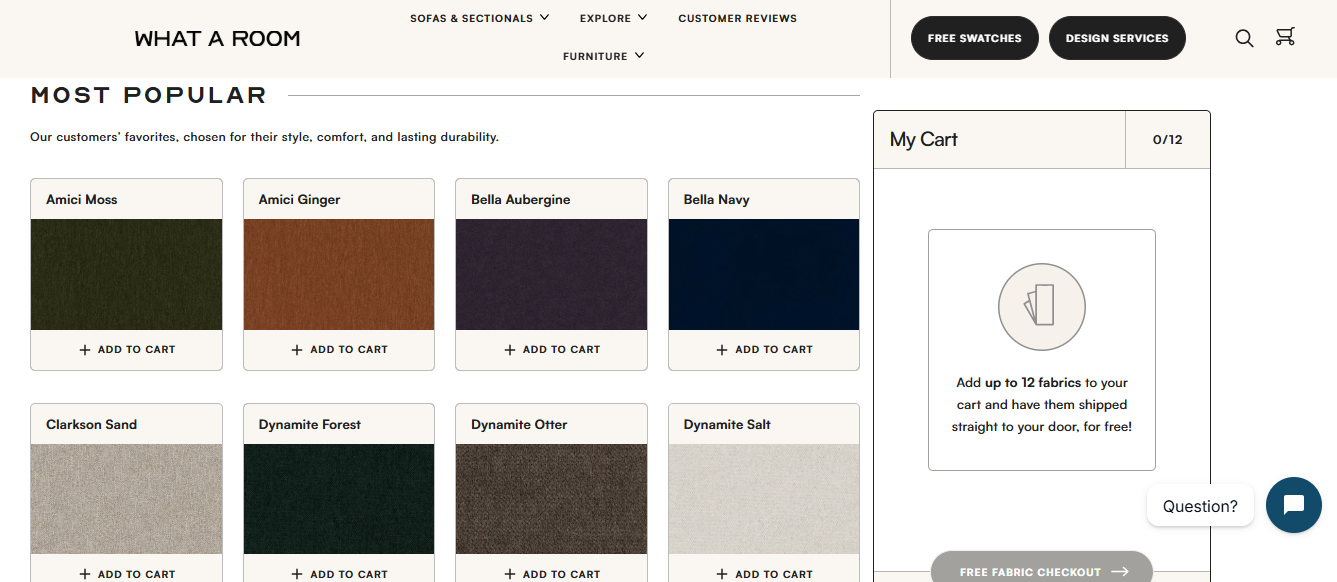
What A Room offers 165+ fabric options across its collections, including a dedicated pet-friendly and machine-washable range. Free swatches typically ship within a couple of days of request.
Fabric selection runs alongside the rest of the customization, letting you compare velvets, performance weaves, and pet-friendly materials directly against your chosen configuration. The pet-friendly and performance options are built specifically to resist stains, spills, and everyday wear, which matters if the sofa is going into a high-traffic household.
Some collection pages list an even broader range, with about 165+ fabrics to choose from. The swatches themselves aren’t limited, and customers can request up to 12 free fabric samples to compare side by side at home, which is a meaningfully larger set than the “order one or two swatches” approach some retailers use.
West Elm
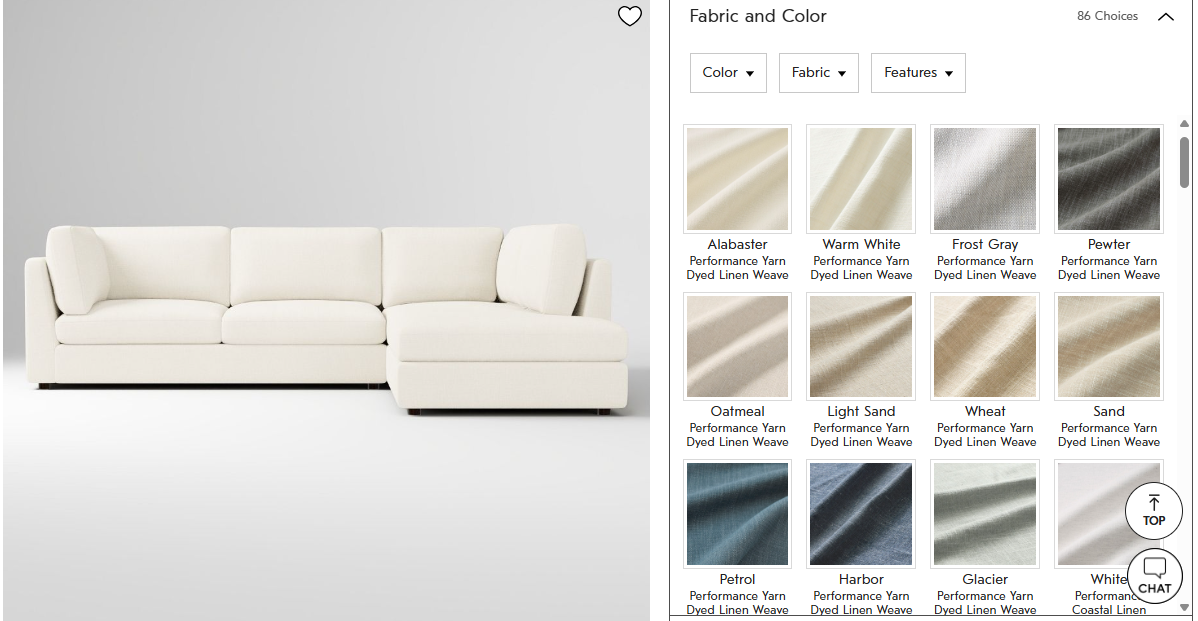
West Elm’s fabric range varies by collection, with some lines offering around 100 options. Performance fabrics (resistant to stains and everyday wear) appear across much of the catalog, especially on family-friendly pieces.
Custom upholstery is organized into tiers by fabric type, each with its own care profile, and most require spot cleaning or professional cleaning. West Elm also offers free swatches.
Things to Watch Out For When Buying a Sofa
A sofa is a big enough purchase that a few mistakes can be expensive to fix. Here’s what’s worth double-checking before you order, from either brand or anywhere else:

Measure More Than You Think You Need To
It’s not just floor space. Measure your doorways, hallways, staircases, and elevator (if you have one), since a sofa that fits your living room won’t help you if it can’t get there. Many brands list a “knocked down” or disassembled size for exactly this reason. Ask about it if it’s not listed.
Don’t Skip The Swatch
Fabric always looks different on a screen than in your actual room, under your actual lighting. Both brands here send free swatches, so there’s no real reason to order sight-unseen. Look at the swatch in daylight and in the evening with your lamps on, since warm bulbs can shift a color noticeably.
Ask About The Return And Cancellation Window
This matters even more for made-to-order or custom pieces, since some brands limit or block cancellations once production starts. If a piece takes 6 to 12 weeks to build, know exactly when your window to change your mind closes.
Get Lead Times In Writing, And Build In A Buffer
“3 to 12 weeks” is a big range, and the slower end is more common with popular fabrics or busy seasons. If you need a sofa by a specific date (a move-in, a holiday, hosting family), order well ahead of that date rather than right up against it.
Check What “Assembly Required” Actually Means
Some sofas ship in one piece; others ship in sections you bolt together, which can require two people and a bit of patience. If that’s not something you want to deal with, ask whether white-glove delivery includes assembly and placement in the room, not just a drop-off at your door.
Don’t Assume All Foam Is The Same
Foam density affects how long a cushion holds its shape far more than price does. It’s a fair question to ask any retailer directly: what’s the foam density, and what’s the expected lifespan before it sags or flattens?
Which Option Will Work Best for Your Household?
No matter which company you choose, finding the right fit comes down to your particular needs, requirements, and budget.
West Elm is a solid fit if you don’t mind working within preset module sizes, and its full catalog across living room, dining and kitchen, bedroom, and home office makes it convenient if you’re furnishing several rooms at once.
What A Room makes more sense if your space has real constraints (an odd corner, a specific depth requirement, a need to fit around existing furniture) or if you want a say in the exact firmness and fabric of the piece before it’s built.
What A Room is especially worth a look if you have pets or kids, since the cushions are built to hold their shape for over a decade rather than a few years.


