

- Best Custom Sofa Companies: A Buyer’s Guide - August 18, 2026
- Best Quick-Dry Towels for Everyday Use - August 13, 2026
- What A Room vs Arhaus: Which Custom Sofa Brand Is Right for You? - August 8, 2026
You’ve finally moved into a real place. Not a starter apartment, but maybe your forever home. The IKEA sofa you’ve been moving around since college has seen better days and isn’t going to cut it in your new home. You want something that actually fits the space, something you’re not replacing in three years, something worth spending real money on.
So you do what most people do: you spend a Saturday afternoon going to all the local retailers, like Pottery Barn, West Elm, and Crate & Barrel. You sit on all the floor models and look at fabric swatches, but you walk out thinking everything looks somewhat the same. Nothing feels special, the sizes are either too big or too small for your living room, the customization options are limited, and the prices aren’t exactly budget-friendly for something that still feels like everyone else’s sofa.
Then you start looking online, which opens up a whole different kind of anxiety. Spending $4,000 or $5,000 on something you’ve never seen in person is a hard sell. What if the fabric feels cheap? What if the dimensions are off? What if it just doesn’t look right in your space?
That’s where What A Room comes in. This What A Room review looks at whether it’s actually worth it, how the custom sofa process works, and whether the shopping experience solves the problems standard furniture retailers leave behind.
Quick Verdict
What A Room is worth considering if you want a custom-sized sofa, more fabric and cushion options than most big retailers offer, and design help before you commit to a $4,000 to $5,000 purchase. It makes the most sense for buyers with unusual room dimensions, pets, kids, or specific style needs. The main downside is that unless you can visit the San Jose showroom, you are still buying a sofa you have not sat on first.
Where Big Retailers Fall Short
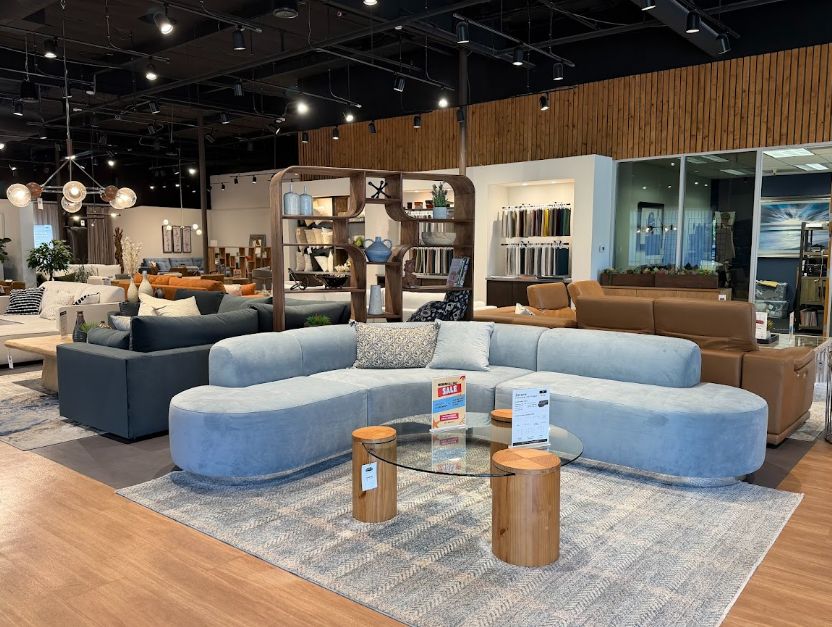
Here’s what shopping at Pottery Barn or Crate & Barrel at the $4,000 to $5,000 price point looks like: you’re picking a sectional from a fixed set of sizes, choosing between maybe a handful of fabrics, and hoping it works in your room. The sofa is fine. The brand is reputable. But you’re not getting a lot of flexibility, and the design service you do get is likely going to steer you toward looking like a page out of their catalog.
For a lot of buyers, that’s completely fine. If you like the aesthetic, prefer muted colors, have a standard-sized living room, and want a straightforward style, those big retailers work. But if your space is small, weirdly shaped, or has specific needs because of a toddler, a cat, or a dog that treats the sofa like a bed, the fixed-size, limited-fabric model starts to feel like a real constraint.
That is the gap What A Room is trying to fill. Maybe you want something that doesn’t look like the norm, you want something modern, or maybe you want to add a splash of color and let your personality come through in your sofa.
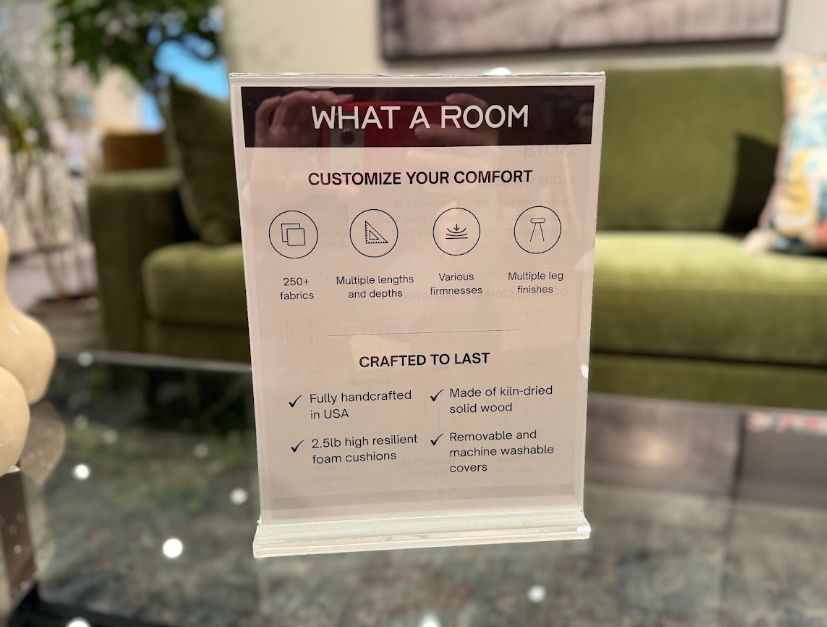
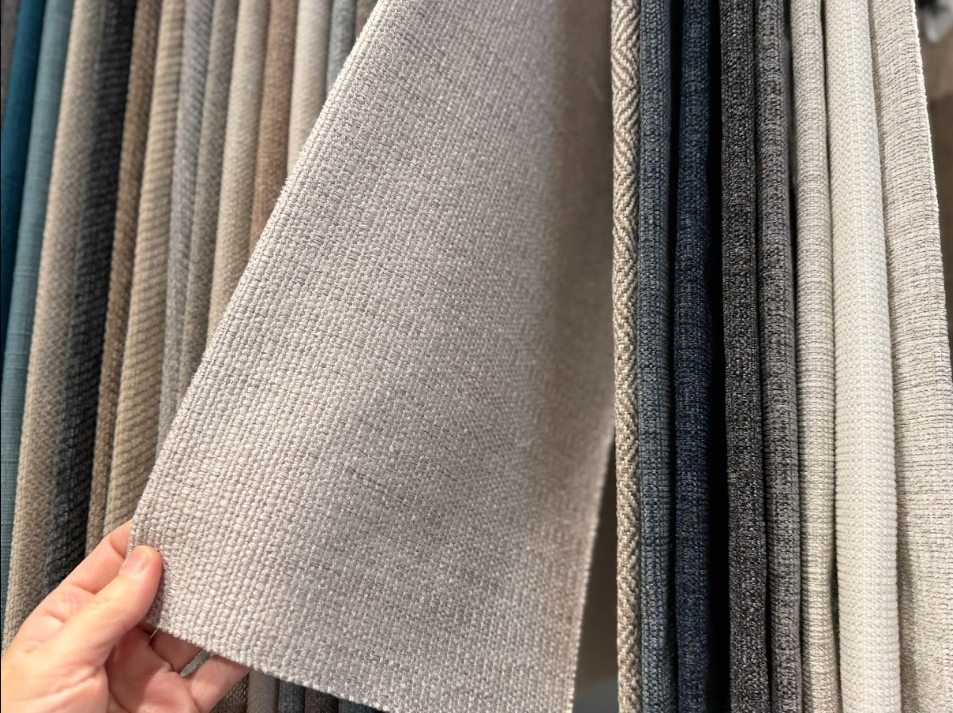
What A Room is built for the buyer who needs more than a standard retail option. They have 165+ fabric options (including bolder color choices), multiple leg styles, four cushion firmness levels, and they’ll build the sofa to your exact room dimensions, not whatever size happens to be on the floor.
What Is What A Room?
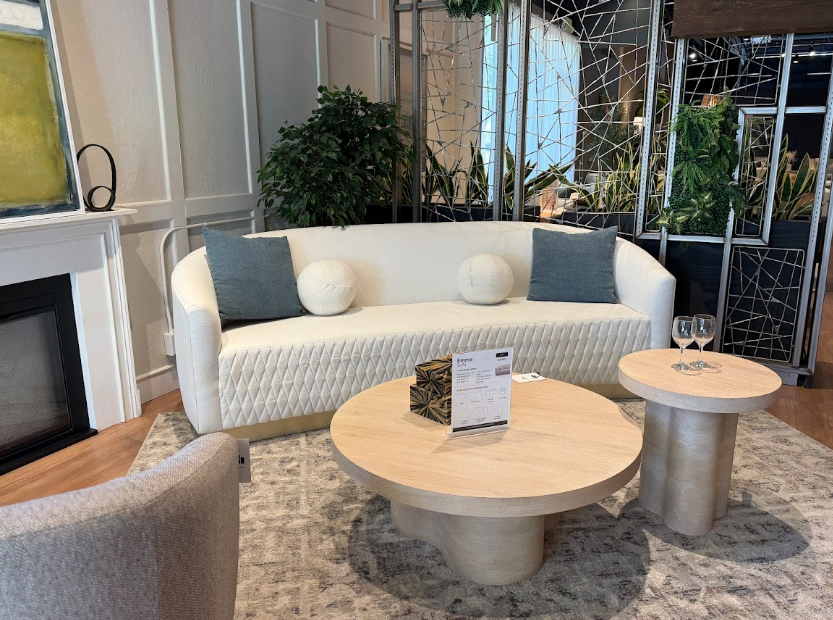
What A Room is a California-based custom furniture company with more than 20 years of experience in custom upholstery. The brand builds made-to-order sofas and sectionals in the USA, ships nationwide, and has a showroom in San Jose for buyers local to the Bay Area. Custom upholstery is not a side offering for What A Room. It is the entire business.
The company’s sofas are built with kiln-dried solid wood frames and high-density foam cushions, with fabric choices meant to fit your actual lifestyle. What A Room’s fabrics are free of PFAS, PFOA, and PFOS, and the brand offers pet-friendly, kid-friendly, and machine-washable options. Buyers can also choose between four cushion options: soft, medium, firm, and Trillium.
How the What A Room Ordering Process Works
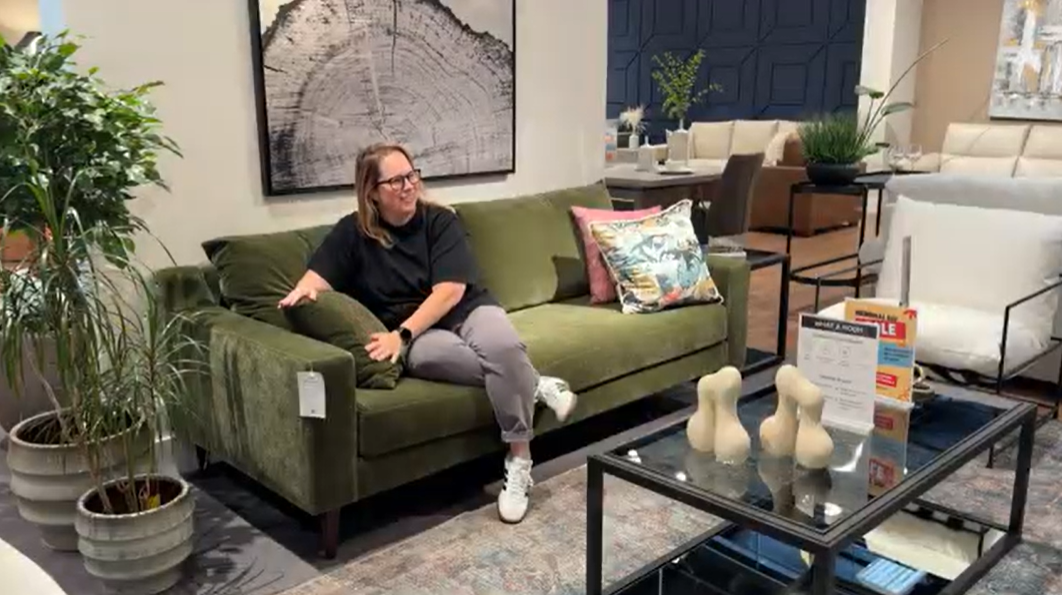
This is where What A Room separates itself from anything you’d do at a traditional retailer. Instead of choosing from a few standard sizes and hoping one works, you can start with your actual room.
You start by filling out a design consultation form on their site. You share your name, email, and what you actually need help with: space planning, fabric selection, custom sizing, style direction, or some combination of those. You can also upload your floor plan if you have one, photos of your space, and specifics about what you’re thinking. Maybe that’s an L-shape, a U-shape, a chaise on one side, whatever your space calls for.
From there, the team gets back to you within 1 to 2 business days with next steps. The free design consultation can include up to three complimentary design concepts: 2D and 3D layouts, scaled to your actual space, and showing different configurations. This is free. The renderings, the consultation, all of it is included.
Buying a sofa online is already a stretch for most people. Being able to see a scaled rendering of your specific room with your specific sofa configuration is a different experience than scrolling product photos and hoping for the best. That kind of visual support makes the process feel less like a gamble, especially when you are spending several thousand dollars on a custom piece.
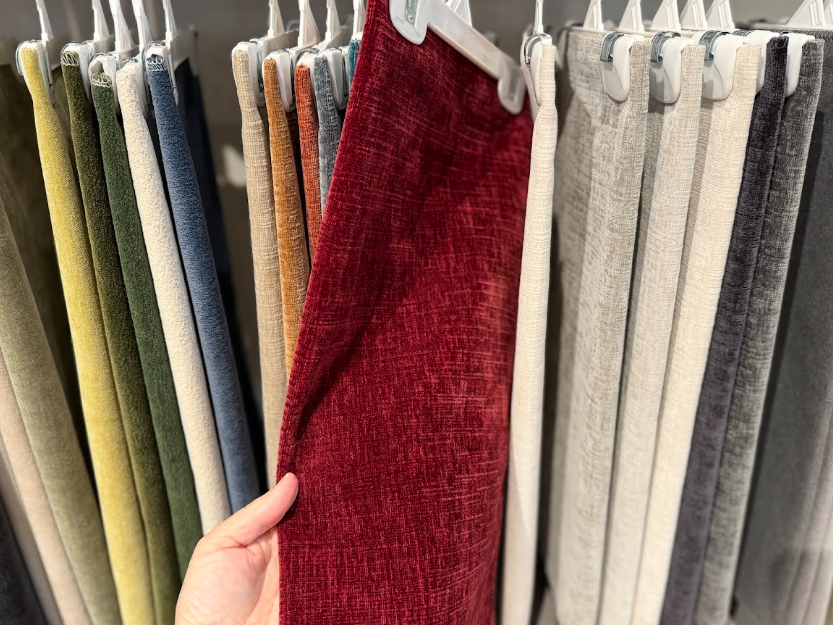
You can also order up to 12 free fabric samples before you commit to anything. They ship fast. You get to feel the fabric in your actual light, next to your actual floors, before you make a decision.
Build Quality and Materials
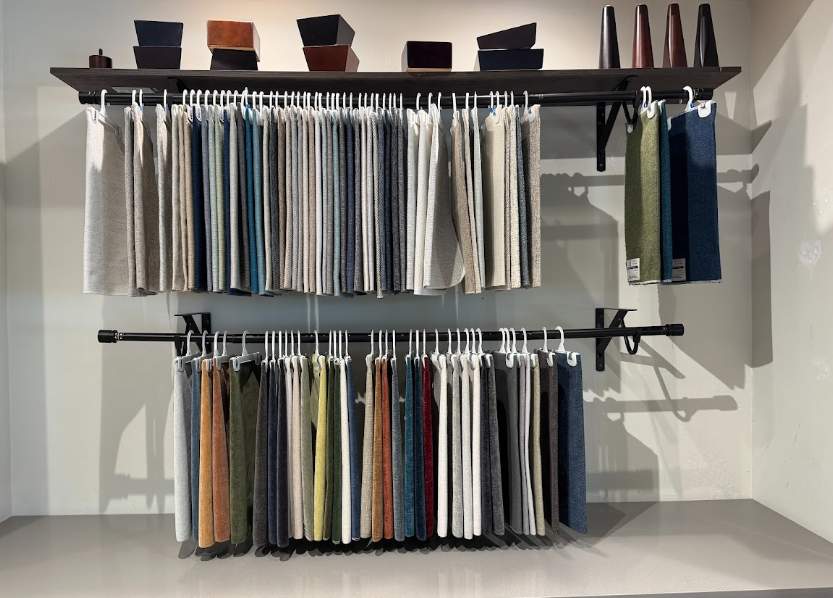
What A Room positions itself as a buy-it-once kind of purchase, and the materials are high quality. The frames are solid wood, kiln-dried, and built to hold up over years of real use. The foam is high-density, 2.5 lb high-resilience foam, which is meaningfully denser than the 1.8 to 2.0 density foam you’ll find at Crate & Barrel or Room & Board. That difference can show up after a few years. Lower-density foam is more likely to sag and compress over time, while higher-density foam tends to hold its shape longer.
The fabric options matter too. What A Room offers machine-washable, pet-friendly, and kid-friendly fabric options, and its materials are free of PFAS, PFOA, and PFOS. For a sofa you’re planning to keep for a decade, all of that is important. You want something that’s going to last and still look good after real life with pets, kids, spills, and everyday use.
Delivery
What A Room offers white-glove delivery. That means they bring the sofa into your room, handle basic setup and assembly, go up to three flights of stairs, and take all the packaging with them when they leave. Pottery Barn charges a flat fee for white-glove delivery. Crate & Barrel does too. At What A Room, white-glove delivery is available at no additional upgrade cost, though standard delivery rates still apply and ZIP code eligibility can vary.
What A Room vs. Pottery Barn, Crate & Barrel, and Interior Define
Spending $4,000 to $5,000 on a sofa is not a casual or quick decision, and it’s worth being honest about what you get at that number across the different options.
At Pottery Barn, West Elm, or Crate & Barrel, you’re getting a known brand, a reliable product, and maybe a handful of fabric and size options. The quality is decent. The process is simple. But you are largely buying off a set menu, and if your room doesn’t fit the menu, you’re adjusting your expectations.
Interior Define is a closer comparison because it also offers custom sofas, in-person studios, free design services, and 10 free fabric swatches. They’ll put together mood boards and a floor plan layout, which is helpful. But they don’t offer full room renderings, their fabric samples cap at 10, and white-glove delivery runs a flat $299 fee. Their fabrics also require dry cleaning rather than machine washing, something to consider with pets and kids. Pricing runs comparable to What A Room and edges slightly higher into the $5K range on certain sectionals. Based on available information, Interior Define manufactures overseas, while What A Room builds in the USA.
At What A Room, the customization is real. You get real choices in fabrics, legs, and, most importantly, dimensions. If your room needs a specific size, they can build around that. There are 165+ fabrics, 13 sofa styles, multiple leg options, and four firmness levels. The design service is personal and it’s included, and the room renderings go beyond what many custom furniture brands offer upfront. The build quality, the frame construction, the foam density, and the fabric specs are all designed to outlast what you’d get at most retailers in this range.
Where you do give something up is that What A Room has a smaller public review footprint than the big retailers. The showroom is limited to San Jose. You are buying something you likely can’t sit on first. The sample program and the rendering service go a long way toward managing that, but it’s still a consideration. If you need to physically sit on a sofa before you buy it, that’s a real constraint.
If your room is a standard shape and you just want a reliable sofa from a familiar brand, the big retailers work fine. But if you’re working with a small or unusual space, have specific durability needs, or want a design process that treats your room as the starting point rather than an afterthought, What A Room is doing something other retailers aren’t.
Customer Reviews
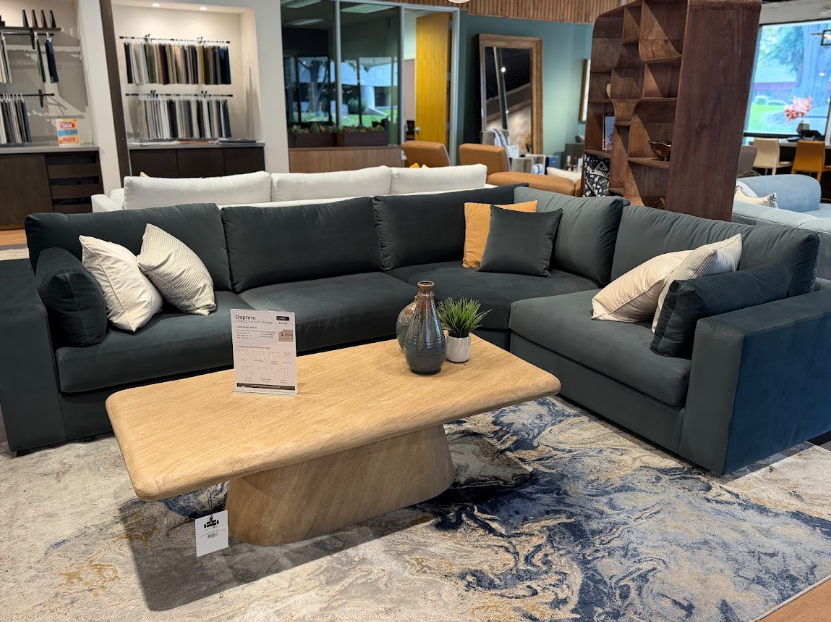
What A Room’s customer reviews are generally strong, but the most useful way to read them is by looking for patterns rather than focusing on one perfect review. Positive reviews often mention the same themes that stand out in the buying process: custom sizing, helpful design guidance, fabric selection, and customer service that works through measurements, layouts, and production questions.
This review is from a recent buyer and is on their site: “After months of back-and-forth and multiple renderings, the team helped them land on a configuration for a living room with an awkward shape. The priorities were a high back for support, seating for five, and fabric that would hold up against cats. The piece delivered on all three.”
And another: “I was honestly nervous after not hearing updates for a bit, but the team responded and gave me a clear production timeline. The couch arrived and I absolutely love it. The quality feels solid, the fabric is beautiful, and it looks exactly like I hoped. It did take slightly longer than the original estimate, but it was worth the wait. I’m really happy with my purchase.”
There are 439 reviews on their website with a 4.9 rating. And 725 reviews on their San Jose showroom with a 4.6 rating.
The complaints are worth paying attention to, too. On Trustpilot, for example, the brand has a small number of reviews, including a couple of negative ones. One unhappy buyer said the medium cushions felt much softer than expected, the fabric started to pill, and the sofa felt too light unless it was placed against a wall. What A Room responded the next day with suggestions and an offer to help make the situation right.
Overall, the review pattern is quite positive. Buyers who value customization, design help, and made-to-order sizing tend to be very happy with the experience, with many highlighting the personalized support and ability to create a sofa that fits their space perfectly. While there are some typical considerations that come with any custom sofa purchase, most customers feel the end result is well worth it.
Who What A Room Is Best For
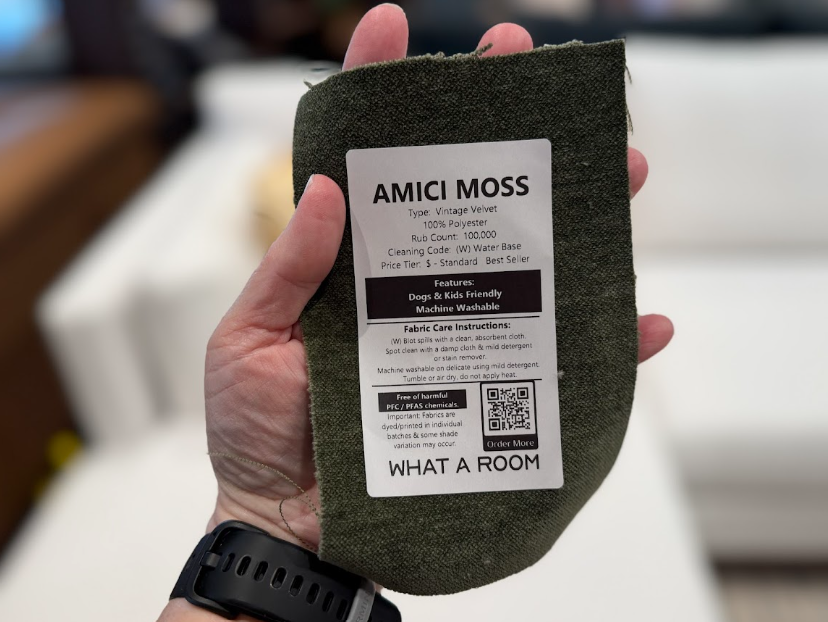
What A Room makes the most sense if your space has some quirk to it: odd dimensions, not enough room for a standard sectional, or if you’ve been to the stores and nothing quite fits your space or personality. It’s also a strong fit if you need machine-washable, pet-friendly, or kid-friendly fabric options, or if you’re tired of buying sofas every few years and want to get it right once. The design service is a real differentiator for anyone who feels overwhelmed by the process and wants someone to help think it through.
What A Room is probably not the best fit if you need to sit on something before you buy it and can’t make it to San Jose. That’s a genuine limitation. And if you’re furnishing multiple rooms at once and want to pull everything from one place, the big retailers give you more range across categories than What A Room does.
Final Thoughts
What A Room isn’t trying to be Pottery Barn or another large retailer. What they’re doing is building custom furniture around your actual room, with a level of service that most retailers at this price point don’t offer.
The materials are built for long-term use, the process takes more effort than clicking “add to cart,” and the design service, with the renderings and the back-and-forth until you feel good about it, is what makes the buying experience genuinely different from anything you’d get at a retail store.
If you’re at the $4,000 to $5,000 mark and you’re not finding what you need at the standard retailers, What A Room is a solid option. Fill out the form, order the samples, and see what the design team comes back with. That part costs you nothing and will tell you pretty quickly whether this is the right fit.


